Recently a woman came into the store here at Woofles and Meowz and was browsing our selection of "soft" harnesses.
I asked her what type of dog she had, after a quick info shpiel on the benefits of using that particular type of harness, and why she was wanting a harness.
She said that she was presently using a strap harness on her 3 month old dog and I asked her why she wanted a soft harness...."I dunno" she shrugged with a wry smile.
"Ok what is the concern with the other harness?" I asked her with a knowing smile.
"I dunno..I just don't like it" was her response.
"Do you prefer a harness over a collar?"
"I'm not sure" she gave with a bit of a flip of the head.
*sigh*
".............ok, well, harnesses don't work as well as a collar with walking on a lead" I started
"but it CHOKES!"she blurted.
".............um...............yes.....to a point...........that..............it how................the dog...........learns that you ..........want...........them to mind you" was all I could get out as she scowled at me.
Needless to say the rest of the exchange was less than productive though I did try to explain that I would like her to know that I often talk people out of buying items that I think they would not use or need to use............she would have none of it though as there was a bit of a quietly defensive nature I was dealing with so I just let it go. Sometimes you just have to do this.
Now, at this point I knew it was a lost cause....this type of person was the same type that I used to see in dog class who would refrain from doing ANY kind of behaviour control and WONDER why their dog was so misbehaved.
The blog could go on for several more paragraphs on the proper exchange of intent in teaching dogs but in this blog I would like to focus on one thing that she was sorrowly lacking besides good sense and that is good equipment.
Harnesses while great for some things are NOT great for teaching proper lead control and sitting, staying techniques.
As harnesses distribute weight throughout a larger area the dog is uncertain to what you need he/she to do when a simple,short,twitch is used to correct behaviour.
We are NOT talking about choking or mangling a dog's neck we are talking about getting their attention.
A MARTINGALE collar is a great tool in this regard for a few reasons...one is that it gives a gentle squeeze to the dog when and only when the dog pulls excessively.
Two is that it does the same thing when a a quick jerk of the lead is used and it releases immediately.
Three is that the chained kind rather than the "soft" Martingale gives a clicking feel and noise that indicates after a while not to pull.
********
Martingale Dog collars are also known as Greyhound, Whippet or humane choke collars. The Martingale dog collar was designed for Sighthounds because their necks are larger than their heads and they can often slip out of buckle collars. These collars have gained popularity among other breed owners in the recent past with many trainers now recommending them instead of choke chains or buckle collars.
Martingale Dog Collars are fitted to the exact size of the dog's neck when the collar is pulled closed. Properly fitted, the collar will be comfortably loose when not in use. When the Martingale control loop is pulled, the two slides (hardware on the small control loop of the Martingale Collar) should pull close together but the two slides should never touch otherwise the squeezing is not effective.
THIS is what the woman should have been using on her dog but somewhere, somehow, someone told her that her pooch should not have anything around its neck....that it was a bad idea. She was ans is ill informed and unfortunately will not be able to control her dog as well as she should.
The right tools used in the right manner have always produced results and this is so true with dog equipment as well.
Cheers and WOOF!!!!
Tuesday, August 18, 2009


Thursday, July 30, 2009
Keeping your dog cool with Woofles and Meowz
Be a Cool Owner: Don’t Let Your Dog Overheat
Working up a good sweat in the hot summer months may be good for you, but it can lead to heat stroke in your dog and kill him in a matter of minutes. Heat stroke is a dangerous condition that takes the lives of many animals every year. Your dog's normal body temperature is 100.5 to 102.5 degrees Fahrenheit. If it rises to 105 or 106 degrees, the dog is at risk for developing heat exhaustion. If the body temperature rises to 107 degrees, your dog has entered the dangerous zone of heat stroke. With heat stroke, irreversible damage and death can occur. Here are some cold summer facts: The temperature in a parked car can reach 160 degrees in a matter of minutes, even with partially opened windows. And any dog exercising on a hot, humid day, even with plenty of water, can become overheated. Overheating often leads to heat stroke. As a pet owner, you should know the dangers of overheating and what to do to prevent it.
You should also know the signs of heat stroke and what to do if your dog exhibits those signs.When humans overheat we are able to sweat in order to cool down. However, your dog cannot sweat as easily; he must rely on panting to cool down. Dogs breathe in through the nose and out through the mouth, directing the air over the mucous membranes of the tongue, throat and trachea to facilitate cooling by evaporation of fluid. Your dog also dissipates heat by dilation of the blood vessels in the surface of the skin in the face, ears and feet. When these mechanisms are overwhelmed, hyperthermia and heat stroke usually develop.Dogs who have a thick coat, heart and lung problems or a short muzzle are at greater risk for heat stroke. Others at risk include
Puppies up to 6 months of age
Large dogs over 7 years of age and small dogs over 14 years
Overweight dogs
Dogs who are overexerted
Ill dogs or those on medication
Brachycephalic dogs (short, wide heads) like pugs, English bulldogs and Boston terriers
Dogs with cardiovascular disease and/or poor circulationWhat To Watch For If your dog is overheating, he will appear sluggish and unresponsive. He may appear disorientated. The gums, tongue and conjunctiva of the eyes may be bright red and he will probably be panting hard. He may even start vomiting. Eventually he will collapse, seizure and may go into a coma.If your dog exhibits any of these signs, treat it as an emergency and call your veterinarian immediately. On the way to your veterinary hospital, you can cool your pet with wet towels, spray with cool water from a hose or by providing ice chips for your dog to chew (providing he is conscious). Veterinary Care Heat related illness is typically diagnosed based on physical exam findings and a recent history that could result in overheating. Your veterinarian may perform various blood tests to assess the extent of vital organ dysfunction caused by overheating. Intensity of treatment depends upon the cause and severity of the heat illness.
Mildly increased temperature (less than 105°F) may only require rest, a fan to increase air circulation, fresh water to drink and careful observation.
Markedly increased temperature (greater than 106°F) must be treated more aggressively. Cooling can be promoted externally by immersion in cool water or internally by administering a cool water enema.
Underlying aggravating conditions, such as upper airway obstructive diseases, heart disease, lung disease and dehydration may be treated with appropriate medications, supplemental oxygen or fluid therapy.Home Care Heat stroke is a life-threatening emergency. Check your dog's temperature rectally if you suspect heat stroke. If it is over 105 degrees F, remove your dog from the heat source immediately and call your veterinarian. Meanwhile, place a cool, wet towel over your dog or place him in a cool bath. Do not use ice because it may cause skin injury. Spraying with water from a garden hose also works well.
always...always carry water with you on super hot days like it is in Vancouver this past few weeks...its important for both you and your dog...
WOOF!!
Working up a good sweat in the hot summer months may be good for you, but it can lead to heat stroke in your dog and kill him in a matter of minutes. Heat stroke is a dangerous condition that takes the lives of many animals every year. Your dog's normal body temperature is 100.5 to 102.5 degrees Fahrenheit. If it rises to 105 or 106 degrees, the dog is at risk for developing heat exhaustion. If the body temperature rises to 107 degrees, your dog has entered the dangerous zone of heat stroke. With heat stroke, irreversible damage and death can occur. Here are some cold summer facts: The temperature in a parked car can reach 160 degrees in a matter of minutes, even with partially opened windows. And any dog exercising on a hot, humid day, even with plenty of water, can become overheated. Overheating often leads to heat stroke. As a pet owner, you should know the dangers of overheating and what to do to prevent it.
You should also know the signs of heat stroke and what to do if your dog exhibits those signs.When humans overheat we are able to sweat in order to cool down. However, your dog cannot sweat as easily; he must rely on panting to cool down. Dogs breathe in through the nose and out through the mouth, directing the air over the mucous membranes of the tongue, throat and trachea to facilitate cooling by evaporation of fluid. Your dog also dissipates heat by dilation of the blood vessels in the surface of the skin in the face, ears and feet. When these mechanisms are overwhelmed, hyperthermia and heat stroke usually develop.Dogs who have a thick coat, heart and lung problems or a short muzzle are at greater risk for heat stroke. Others at risk include
Puppies up to 6 months of age
Large dogs over 7 years of age and small dogs over 14 years
Overweight dogs
Dogs who are overexerted
Ill dogs or those on medication
Brachycephalic dogs (short, wide heads) like pugs, English bulldogs and Boston terriers
Dogs with cardiovascular disease and/or poor circulationWhat To Watch For If your dog is overheating, he will appear sluggish and unresponsive. He may appear disorientated. The gums, tongue and conjunctiva of the eyes may be bright red and he will probably be panting hard. He may even start vomiting. Eventually he will collapse, seizure and may go into a coma.If your dog exhibits any of these signs, treat it as an emergency and call your veterinarian immediately. On the way to your veterinary hospital, you can cool your pet with wet towels, spray with cool water from a hose or by providing ice chips for your dog to chew (providing he is conscious). Veterinary Care Heat related illness is typically diagnosed based on physical exam findings and a recent history that could result in overheating. Your veterinarian may perform various blood tests to assess the extent of vital organ dysfunction caused by overheating. Intensity of treatment depends upon the cause and severity of the heat illness.
Mildly increased temperature (less than 105°F) may only require rest, a fan to increase air circulation, fresh water to drink and careful observation.
Markedly increased temperature (greater than 106°F) must be treated more aggressively. Cooling can be promoted externally by immersion in cool water or internally by administering a cool water enema.
Underlying aggravating conditions, such as upper airway obstructive diseases, heart disease, lung disease and dehydration may be treated with appropriate medications, supplemental oxygen or fluid therapy.Home Care Heat stroke is a life-threatening emergency. Check your dog's temperature rectally if you suspect heat stroke. If it is over 105 degrees F, remove your dog from the heat source immediately and call your veterinarian. Meanwhile, place a cool, wet towel over your dog or place him in a cool bath. Do not use ice because it may cause skin injury. Spraying with water from a garden hose also works well.
always...always carry water with you on super hot days like it is in Vancouver this past few weeks...its important for both you and your dog...
WOOF!!
Tuesday, July 21, 2009
Green, organic, sustainable dog treats.
Recently over a dinner party it was discussed about the benefits of being "Green". More than a few people all agreed that it was a necessary direction that we all move towards but I asked "why...what does it mean to you to be green?"
One person suggested that his Prius was the green choice over my Jaguar as it was "less impact on the environment".
I asked "why?"
..."because it obviously takes less gas and throws less carbon emissions into the air" he said smug smile on hs face.
"Ahhhh but"... I countered "Your car in new...had to be made new with batteries that require special handling...plastics that take oil reserves. shipping of the new car...resources lost to manufacturing and a $4500. premium that he will have to drive the car 10+ years to recoup the gasoline savings"......the perplexed look on his face was brilliant! ..while the intent is a great one I continued...I bought MY car with 41,000 kms on it...second hand so there was no need to make a new car......I saved money buying second hand......I dont have to store mercury and lead batteries when It goes to the scrap heap...if ever...the hand built panels can be hammered out if dented and not simply replaced with more plastic and it looks damn hot to boot!
Your choice I said is being "sustainable"..not being "green"....if you wanted to be be green you would have bought a bike or walked.
The point to this story is not to show that one choice is better than another (although admittedly who would not want to drive a Jaguar convertible instead of a Prius...HELLO!?!?) but it is more to the point that we have choices to be more consumer savvy when it comes to how we trade our dollars.
Here at Woofles and Meowz I make great efforts to buy organic ingredients that are local and items that are made in Canada or BC, Plastics that are biodegradeable and choices on how you can purchase items.
Nobody is perfect and nobody should say that anyone MUST live a "green" or sustainable lifestyle but it is important to try if you want to and get the proper information on the products that we take home. Don't just jump on the bandwagon and subscribe to the buzz words and catch phrases of the day and make yourself feel better by not using a bag to put that bottled water into........buy from true organic, local producing places like Woofles and Meowz and for that matter most of the stores here on Granville Island.
..............just sayin'!
WOOF!!!
One person suggested that his Prius was the green choice over my Jaguar as it was "less impact on the environment".
I asked "why?"
..."because it obviously takes less gas and throws less carbon emissions into the air" he said smug smile on hs face.
"Ahhhh but"... I countered "Your car in new...had to be made new with batteries that require special handling...plastics that take oil reserves. shipping of the new car...resources lost to manufacturing and a $4500. premium that he will have to drive the car 10+ years to recoup the gasoline savings"......the perplexed look on his face was brilliant! ..while the intent is a great one I continued...I bought MY car with 41,000 kms on it...second hand so there was no need to make a new car......I saved money buying second hand......I dont have to store mercury and lead batteries when It goes to the scrap heap...if ever...the hand built panels can be hammered out if dented and not simply replaced with more plastic and it looks damn hot to boot!
Your choice I said is being "sustainable"..not being "green"....if you wanted to be be green you would have bought a bike or walked.
The point to this story is not to show that one choice is better than another (although admittedly who would not want to drive a Jaguar convertible instead of a Prius...HELLO!?!?) but it is more to the point that we have choices to be more consumer savvy when it comes to how we trade our dollars.
Here at Woofles and Meowz I make great efforts to buy organic ingredients that are local and items that are made in Canada or BC, Plastics that are biodegradeable and choices on how you can purchase items.
Nobody is perfect and nobody should say that anyone MUST live a "green" or sustainable lifestyle but it is important to try if you want to and get the proper information on the products that we take home. Don't just jump on the bandwagon and subscribe to the buzz words and catch phrases of the day and make yourself feel better by not using a bag to put that bottled water into........buy from true organic, local producing places like Woofles and Meowz and for that matter most of the stores here on Granville Island.
..............just sayin'!
WOOF!!!
Tuesday, June 23, 2009
Interbred dogs.
Recently and more frequently I have been introduced to bizarre and baffling diseases that animals have that are coming into the store. People have been telling me that their carnivors cannot eat meat..that they are unable to take stairs or run or wear a collar for fear of choking.
With a perplexed mindset I started looking up the major factors to why there is such a problem with animals bred for the "doggy set".
I admit that I had and have my own suspicions with so many years of dog and cat connections but I was enlightened beyond what I expected.
To sum it up in a nutshell.....and without fear of making an overly broad statement I have to come to the conclusion that we have, in the past 100 years, overbred certain "pedigreed" dogs to the point that they have unusual and debilitating physical problems.
Recently it was passed in the UK that breeding standards were to be changed after pressure from the BBC which broadcasts the major dog showing there.
The BBC pulled out of the dog show after it was embroiled in the row over the welfare of pedigree dogs, leaving the event untelevised for the first time in 40 years.
Pedigree Dogs Exposed, a BBC1 documentary last year, claimed some of the Kennel Club's standards were effectively encouraging dog owners to breed ill-health into their pets.
Related Articles
Kennel Club dog breeding shake-up 'not radical enough', RSPCA says
Crufts presenter Peter Purves 'saddened' by BBC's decision to axe coverage
Dog winched to safety after cliff fall
RSPCA fights dog fashion
Inbred pedigree cats suffering from life-threatening diseases and deformities
BBC tightens rules ahead of new series of University Challenge
It revealed that decades of inbreeding has caused epilepsy and cancer among some entrants at the event, described by a leading vet as showcasing "a parade of mutants".
The corporation subsequently suspended coverage of the Crufts dog show in 2009 after The Kennel Club refused to comply with the BBC's demands that 14 'at risk' breeds be excluded from the competition.
Crufts attracted 150,000 visitors last year and an average of three million television viewers each day.
The Kennel Club has now said it will change the standards – the ideal which show dogs must try and match - to ensure that all dogs are "fit for their original function". It will also ban the breeding of close relatives.
There are a number of breed specific amendments, for 78 breeds.
They have been revised so that they will not include anything that could in any way be interpreted as encouraging features that might prevent a dog from breathing, walking and seeing freely.
Under the "strict new rules", the standard for Shar Pei dogs will no longer include exaggerated folds of loose skin across its neck, skull and legs and breeders must stop encouraging "excessive weight" in Labradors.
Owners of Clumber Spaniels will be banned from "exaggerating substance" – the size of a dog's body and muscle – so that they would be fit for their original purpose of working in the field.
Marc Abraham, Kennel Club veterinary advisor, said: "The changes that have been announced today will leave breeders and judges in no doubt about their responsibilities to safeguard the health and welfare of dogs, first and foremost."
The Kennel Club denied suggestions that the new guidelines were bought in as a result of the BBC decision to suspend coverage of Crufts.
The Kennel Club is tied into a contract with the BBC until 2010, meaning it cannot offer the rights to a rival broadcaster. The BBC pays an annual six-figure sum to the Kennel Club for the television rights and could face a legal battle if it decides to suspend payment for the coming year.
Concerns raised by the documentary have already led to the withdrawal of Pedigree, the main sponsor, and the RSPCA. The animal charity welcomed the BBC's decision, describing current breed standards as "morally unjustifiable".
Mark Evans, the RSPCA's Chief veterinary adviser, said watching Crufts was "like seeing a parade of mutants".
He said: "Many characteristics which are considered desirable in pedigree dogs – as defined by the breed standards which the Kennel Club promotes – are actually shocking deformities which affect the welfare and quality of life for hundreds of thousands of dogs.
"There are now recognised to be more than 450 inherited diseases suffered by pedigree dogs and we believe the intentional breeding of deformed dogs and close inbreeding is morally unjustifiable and must stop."
Kennel Club spokesman Caroline Kisko said: "We said in the autumn that a new review standards would be bought out, long before the BBC pulled out of Crufts. As far as we're concerned, we're looking for different broadcasters. We're currently under BBC contract, whether they choose to broadcast for the next year or not."
The revised standards will be used to judge dogs in Crufts 2009.
A BBC spokesman said Crufts would not be shown in March. He added: "We remain open to the idea that Crufts will return to the BBC and this is an interesting development."
Here in Canada we are not too far behind the ill breeding of pets but for a slightly different reason. Traditionally, dogs were bred to do certain tasks and bred into those dogs were physical traits that warranted doing the work asked of it. Here in North America primarily we are seeing physical traits of dogs that are only useful for simple esthetics. Super small dogs called teacup this and teacup that and superfat, long eared breeds that would certainly not be able to attack any task asked of them. The excellent nose on certain hounds are only as good as the short time it takes for the overly fat and loose skinned dog to become too tired to continue. Overheating on dogs unable to breathe through the folds of their nasal cavities simply because someone thought the face should be flatter is beyond comprehension!
Because dogs in the UK have often been bred in pedigreed kennels from Mother to Son and sibling to sibling bad traits are often exaggerated.
Here it seems to be an uneducated eye (read backyard breeder) that "tries" breeding a separate lineage into a family and finds unwanted results and therefor not truly "pedigreed" dogs being sold for serious dollars.
Interestingly enough.......the mixed breeds (NOT the designer dogs..ie:puggle,everything-doodle, etc) are living healthier lives because the right genes are taking up the stand and creating less health related problems.....yay!
Now.......I loves me all kinda dogs....whether mixed breeds or so called pure breeds...I just want to see them live for a loooong time without pain, health problems or chronic digestive issues.
Be careful what you ask for!
WOOF!!!
With a perplexed mindset I started looking up the major factors to why there is such a problem with animals bred for the "doggy set".
I admit that I had and have my own suspicions with so many years of dog and cat connections but I was enlightened beyond what I expected.
To sum it up in a nutshell.....and without fear of making an overly broad statement I have to come to the conclusion that we have, in the past 100 years, overbred certain "pedigreed" dogs to the point that they have unusual and debilitating physical problems.
Recently it was passed in the UK that breeding standards were to be changed after pressure from the BBC which broadcasts the major dog showing there.
The BBC pulled out of the dog show after it was embroiled in the row over the welfare of pedigree dogs, leaving the event untelevised for the first time in 40 years.
Pedigree Dogs Exposed, a BBC1 documentary last year, claimed some of the Kennel Club's standards were effectively encouraging dog owners to breed ill-health into their pets.
Related Articles
Kennel Club dog breeding shake-up 'not radical enough', RSPCA says
Crufts presenter Peter Purves 'saddened' by BBC's decision to axe coverage
Dog winched to safety after cliff fall
RSPCA fights dog fashion
Inbred pedigree cats suffering from life-threatening diseases and deformities
BBC tightens rules ahead of new series of University Challenge
It revealed that decades of inbreeding has caused epilepsy and cancer among some entrants at the event, described by a leading vet as showcasing "a parade of mutants".
The corporation subsequently suspended coverage of the Crufts dog show in 2009 after The Kennel Club refused to comply with the BBC's demands that 14 'at risk' breeds be excluded from the competition.
Crufts attracted 150,000 visitors last year and an average of three million television viewers each day.
The Kennel Club has now said it will change the standards – the ideal which show dogs must try and match - to ensure that all dogs are "fit for their original function". It will also ban the breeding of close relatives.
There are a number of breed specific amendments, for 78 breeds.
They have been revised so that they will not include anything that could in any way be interpreted as encouraging features that might prevent a dog from breathing, walking and seeing freely.
Under the "strict new rules", the standard for Shar Pei dogs will no longer include exaggerated folds of loose skin across its neck, skull and legs and breeders must stop encouraging "excessive weight" in Labradors.
Owners of Clumber Spaniels will be banned from "exaggerating substance" – the size of a dog's body and muscle – so that they would be fit for their original purpose of working in the field.
Marc Abraham, Kennel Club veterinary advisor, said: "The changes that have been announced today will leave breeders and judges in no doubt about their responsibilities to safeguard the health and welfare of dogs, first and foremost."
The Kennel Club denied suggestions that the new guidelines were bought in as a result of the BBC decision to suspend coverage of Crufts.
The Kennel Club is tied into a contract with the BBC until 2010, meaning it cannot offer the rights to a rival broadcaster. The BBC pays an annual six-figure sum to the Kennel Club for the television rights and could face a legal battle if it decides to suspend payment for the coming year.
Concerns raised by the documentary have already led to the withdrawal of Pedigree, the main sponsor, and the RSPCA. The animal charity welcomed the BBC's decision, describing current breed standards as "morally unjustifiable".
Mark Evans, the RSPCA's Chief veterinary adviser, said watching Crufts was "like seeing a parade of mutants".
He said: "Many characteristics which are considered desirable in pedigree dogs – as defined by the breed standards which the Kennel Club promotes – are actually shocking deformities which affect the welfare and quality of life for hundreds of thousands of dogs.
"There are now recognised to be more than 450 inherited diseases suffered by pedigree dogs and we believe the intentional breeding of deformed dogs and close inbreeding is morally unjustifiable and must stop."
Kennel Club spokesman Caroline Kisko said: "We said in the autumn that a new review standards would be bought out, long before the BBC pulled out of Crufts. As far as we're concerned, we're looking for different broadcasters. We're currently under BBC contract, whether they choose to broadcast for the next year or not."
The revised standards will be used to judge dogs in Crufts 2009.
A BBC spokesman said Crufts would not be shown in March. He added: "We remain open to the idea that Crufts will return to the BBC and this is an interesting development."
Here in Canada we are not too far behind the ill breeding of pets but for a slightly different reason. Traditionally, dogs were bred to do certain tasks and bred into those dogs were physical traits that warranted doing the work asked of it. Here in North America primarily we are seeing physical traits of dogs that are only useful for simple esthetics. Super small dogs called teacup this and teacup that and superfat, long eared breeds that would certainly not be able to attack any task asked of them. The excellent nose on certain hounds are only as good as the short time it takes for the overly fat and loose skinned dog to become too tired to continue. Overheating on dogs unable to breathe through the folds of their nasal cavities simply because someone thought the face should be flatter is beyond comprehension!
Because dogs in the UK have often been bred in pedigreed kennels from Mother to Son and sibling to sibling bad traits are often exaggerated.
Here it seems to be an uneducated eye (read backyard breeder) that "tries" breeding a separate lineage into a family and finds unwanted results and therefor not truly "pedigreed" dogs being sold for serious dollars.
Interestingly enough.......the mixed breeds (NOT the designer dogs..ie:puggle,everything-doodle, etc) are living healthier lives because the right genes are taking up the stand and creating less health related problems.....yay!
Now.......I loves me all kinda dogs....whether mixed breeds or so called pure breeds...I just want to see them live for a loooong time without pain, health problems or chronic digestive issues.
Be careful what you ask for!
WOOF!!!
Saturday, June 6, 2009
Woofles and Meowz Pet bakery and boutique.
Having a super group of regular customers at the store as well as dedicated, returning travellers. (which amazes me that people come back each year to the same store for items for their pets...that ROCKS!!!) I love when people send me photos of their pets.
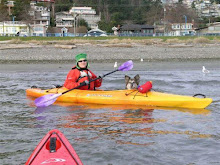
Christie Cameron recently sent me a pic of her and her dog "Rose" kayaking. There they were floating along cool as could be...what more could you ask for huh?!??
I'll post a pic of them on the right side of the blog.
Thanks for the pic Christie!
Christie Cameron recently sent me a pic of her and her dog "Rose" kayaking. There they were floating along cool as could be...what more could you ask for huh?!??
I'll post a pic of them on the right side of the blog.
Thanks for the pic Christie!
Spay and Neuter your pets.
So there is a customer of Woofles and Meowz that came into the store with his wife and dog several months ago proudly displaying his remarkable new dog. This dog was already 9 months old and he was getting pressure from his wife and friends to get the dog "fixed" as there was some aggressive tendancies being exhibited. After a short conversation where I asked why he was against the procedure he suggested that by neuturing his dog it ..and I quote.."make him less of a man". "You mean..less of a stud dog" I countered. "Yeh, thats what I mean" he said with his wife rolling her eyes in the background.
"Well" I said.."it is fine if you plan on breeding this dog in controlled circumstances, with other pedigreed dogs in the hopes that you can offer the pups for sale after you have created enough space, time, vet prep, innoculations,community connections within that breed standard....."
"oh I guess it can't be that he does the business and comes back home?
At that point I took a hard look at him and said with full backbone up "you know, don't you that a stud dog has amny more needs and requirements than a neutered dog right?....it can be the dog will mark and be territorial towards male dogs and possibly aggressive to people who he feels the need to dominate...that includes your kids and wife right? Not to mention the stress of a dog that will be constantly in a state of need to mate right? The fact that the dog stills has it's "berries" has no connection or suggestion of lack of manhood in it's owner right?!??
He just looked at me.
"Seriously, dude, what is the deal? I went on..."what is YOUR connection to his balls...what makes his ability to breed..to carry on a line by amateur dog fanciers so important to you? Are you a dog show watcher?"
"No."
"Do you or have you ever bred dogs before?"
"NO"....he is starting to get angry now.....his wife is grinning ear to ear.
"See the babe behind you?? she's a total fox dude..and she picked you....yer ALREADY a stud! Get over it!! (sometimes being a redneck gay man lets me get away with murder)
Deal with the aggressive behaviour that your dog is showing and talk to a breeder (I gave him a name) and see what they say to do in regards to timing of the "fix."
I recommend that it is later than some other people say to do so providing you can adequately handle the emotional state for the dog up until then. Too early can also be a problem with regards to health factors.
Fast forward several months:
Here he is with his dog all grins and happy to report that his dog DID get some advanced training and he noticed that all the GOOD traits of the dog were kept and all the bad ones were for the most part culled after the neutering.
"Welllll DUH!!!! I couldn't resist as I fed the dog a big 'ol treat....good on ya!
"Yahhh " he said..."and I'm getting divorced!!
"WHAT?!??!??"
"Just kidding!"
well I was on the floor with laugher! He had let go of silly notions and was happy enough to zing me with a good joke.
Sometimes I love my work.....
The following is an article I read on this subject recently>>>
Bringing home a dog is the easy part. Taking care of and being responsible for the dogs in our care is the part that separates the responsible owners from the irresponsible ones. One of the most frequent topics that arise in alignment with responsible dog ownership is about spaying and neutering our dogs.
What I hope to accomplish in this short article is for you to determine when is the best time to spay or neuter your dog and the ramifications if you do not do this: both for the health of your dog and the responsibility you accepted just by bringing this dog home with you.
I really hope you'll read this all the way through and then understand that I am not against spaying and neutering but rather I'm about being responsible for all aspects of your dog's care. I've recently discovered from a veterinarian friend, that our animals are being spayed and neutered far too young for their long-term health and longevity. If we continue to neuter or spay them before they are fully mature the problems with immune-mediated diseases - due in part also to poor nutrition and overvaccinating – will only grow worse. Hormones are in our bodies and those of our dogs for a reason. Hormones play key roles in the overall health and longevity of the life of our dogs. Therefore it just makes sense that neutering or spaying too young could certainly lead to long-term health problems in our dogs.
What I am not saying here is to forgo the responsibility of spaying and neutering your pet animals. Really I think that breeding should be left up to the responsible, ethical breeders who care about the structure, health, temperament, and so on of the breeds they are breeding. I do not think the average person who has a purebred or mixed breed dog should breed their dogs. I also feel that the responsible thing to do is to neuter or spay our dogs to alleviate the needless euthanasia and waste of animals that end up in shelters. The only thing I am questioning here is when they should be spayed or neutered. I believe dogs need to mature fully before being spayed or neutered to insure their long-term good health. If we neuter a giant breed male dog at six months for example, rather than at eighteen months to two years, we are almost insuring this dog will have structural or joint problems fully manifested by age six or seven thereby effectively shortening the quality and length of the dog's life.
This does fly in the face of what we're being told now by shelters and rescues but again, part of that is propaganda being taught at all levels of animal husbandry. Rather than turn this article into a political statement I'd rather focus on the positive reinforcement of responsible dog ownership. Before bringing a dog home, determine the best possible age for spaying or neutering your dog in advance so you will be prepared to protect your pet prior to being spayed or neutered. For help on this subject go to Dr. John Symes, DVM website at www.dogtorj.net . He can help you to determine the best age for you to neuter or spay your breed of dog. Remember though, it will be up to you to make certain your dog is contained in an area where he or she cannot propagate their species: meaning not being able get out or loose to breed. Once your dog reaches maturity then spaying or neutering would be the right course of action on your part.
http://dogs.suite101.com/article.cfm/the_responsibility_of_dog_ownershi#ixzz0HhIInoNp&C
"Well" I said.."it is fine if you plan on breeding this dog in controlled circumstances, with other pedigreed dogs in the hopes that you can offer the pups for sale after you have created enough space, time, vet prep, innoculations,community connections within that breed standard....."
"oh I guess it can't be that he does the business and comes back home?
At that point I took a hard look at him and said with full backbone up "you know, don't you that a stud dog has amny more needs and requirements than a neutered dog right?....it can be the dog will mark and be territorial towards male dogs and possibly aggressive to people who he feels the need to dominate...that includes your kids and wife right? Not to mention the stress of a dog that will be constantly in a state of need to mate right? The fact that the dog stills has it's "berries" has no connection or suggestion of lack of manhood in it's owner right?!??
He just looked at me.
"Seriously, dude, what is the deal? I went on..."what is YOUR connection to his balls...what makes his ability to breed..to carry on a line by amateur dog fanciers so important to you? Are you a dog show watcher?"
"No."
"Do you or have you ever bred dogs before?"
"NO"....he is starting to get angry now.....his wife is grinning ear to ear.
"See the babe behind you?? she's a total fox dude..and she picked you....yer ALREADY a stud! Get over it!! (sometimes being a redneck gay man lets me get away with murder)
Deal with the aggressive behaviour that your dog is showing and talk to a breeder (I gave him a name) and see what they say to do in regards to timing of the "fix."
I recommend that it is later than some other people say to do so providing you can adequately handle the emotional state for the dog up until then. Too early can also be a problem with regards to health factors.
Fast forward several months:
Here he is with his dog all grins and happy to report that his dog DID get some advanced training and he noticed that all the GOOD traits of the dog were kept and all the bad ones were for the most part culled after the neutering.
"Welllll DUH!!!! I couldn't resist as I fed the dog a big 'ol treat....good on ya!
"Yahhh " he said..."and I'm getting divorced!!
"WHAT?!??!??"
"Just kidding!"
well I was on the floor with laugher! He had let go of silly notions and was happy enough to zing me with a good joke.
Sometimes I love my work.....
The following is an article I read on this subject recently>>>
Bringing home a dog is the easy part. Taking care of and being responsible for the dogs in our care is the part that separates the responsible owners from the irresponsible ones. One of the most frequent topics that arise in alignment with responsible dog ownership is about spaying and neutering our dogs.
What I hope to accomplish in this short article is for you to determine when is the best time to spay or neuter your dog and the ramifications if you do not do this: both for the health of your dog and the responsibility you accepted just by bringing this dog home with you.
I really hope you'll read this all the way through and then understand that I am not against spaying and neutering but rather I'm about being responsible for all aspects of your dog's care. I've recently discovered from a veterinarian friend, that our animals are being spayed and neutered far too young for their long-term health and longevity. If we continue to neuter or spay them before they are fully mature the problems with immune-mediated diseases - due in part also to poor nutrition and overvaccinating – will only grow worse. Hormones are in our bodies and those of our dogs for a reason. Hormones play key roles in the overall health and longevity of the life of our dogs. Therefore it just makes sense that neutering or spaying too young could certainly lead to long-term health problems in our dogs.
What I am not saying here is to forgo the responsibility of spaying and neutering your pet animals. Really I think that breeding should be left up to the responsible, ethical breeders who care about the structure, health, temperament, and so on of the breeds they are breeding. I do not think the average person who has a purebred or mixed breed dog should breed their dogs. I also feel that the responsible thing to do is to neuter or spay our dogs to alleviate the needless euthanasia and waste of animals that end up in shelters. The only thing I am questioning here is when they should be spayed or neutered. I believe dogs need to mature fully before being spayed or neutered to insure their long-term good health. If we neuter a giant breed male dog at six months for example, rather than at eighteen months to two years, we are almost insuring this dog will have structural or joint problems fully manifested by age six or seven thereby effectively shortening the quality and length of the dog's life.
This does fly in the face of what we're being told now by shelters and rescues but again, part of that is propaganda being taught at all levels of animal husbandry. Rather than turn this article into a political statement I'd rather focus on the positive reinforcement of responsible dog ownership. Before bringing a dog home, determine the best possible age for spaying or neutering your dog in advance so you will be prepared to protect your pet prior to being spayed or neutered. For help on this subject go to Dr. John Symes, DVM website at www.dogtorj.net . He can help you to determine the best age for you to neuter or spay your breed of dog. Remember though, it will be up to you to make certain your dog is contained in an area where he or she cannot propagate their species: meaning not being able get out or loose to breed. Once your dog reaches maturity then spaying or neutering would be the right course of action on your part.
http://dogs.suite101.com/article.cfm/the_responsibility_of_dog_ownershi#ixzz0HhIInoNp&C
Top selling dog toys.
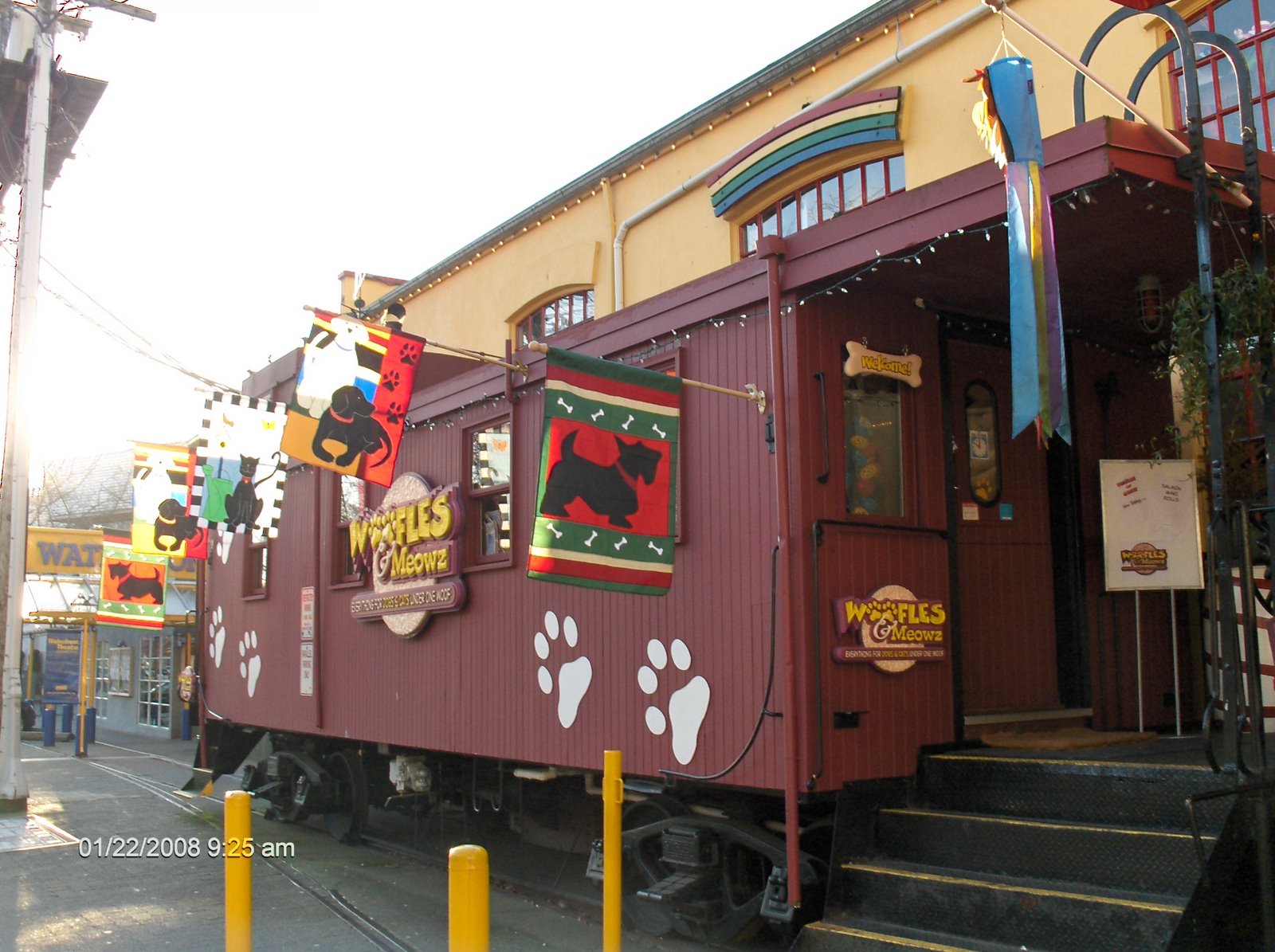
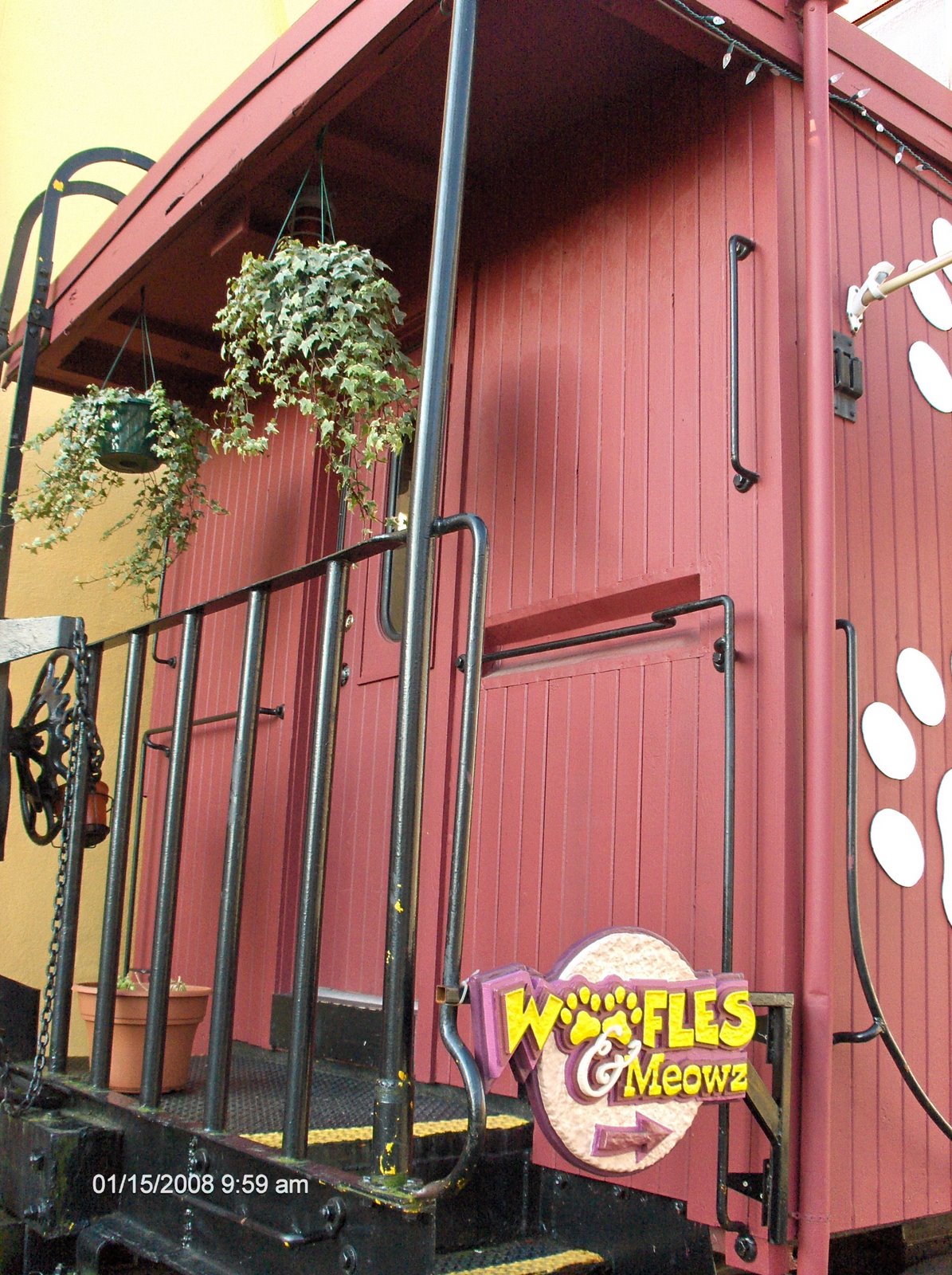
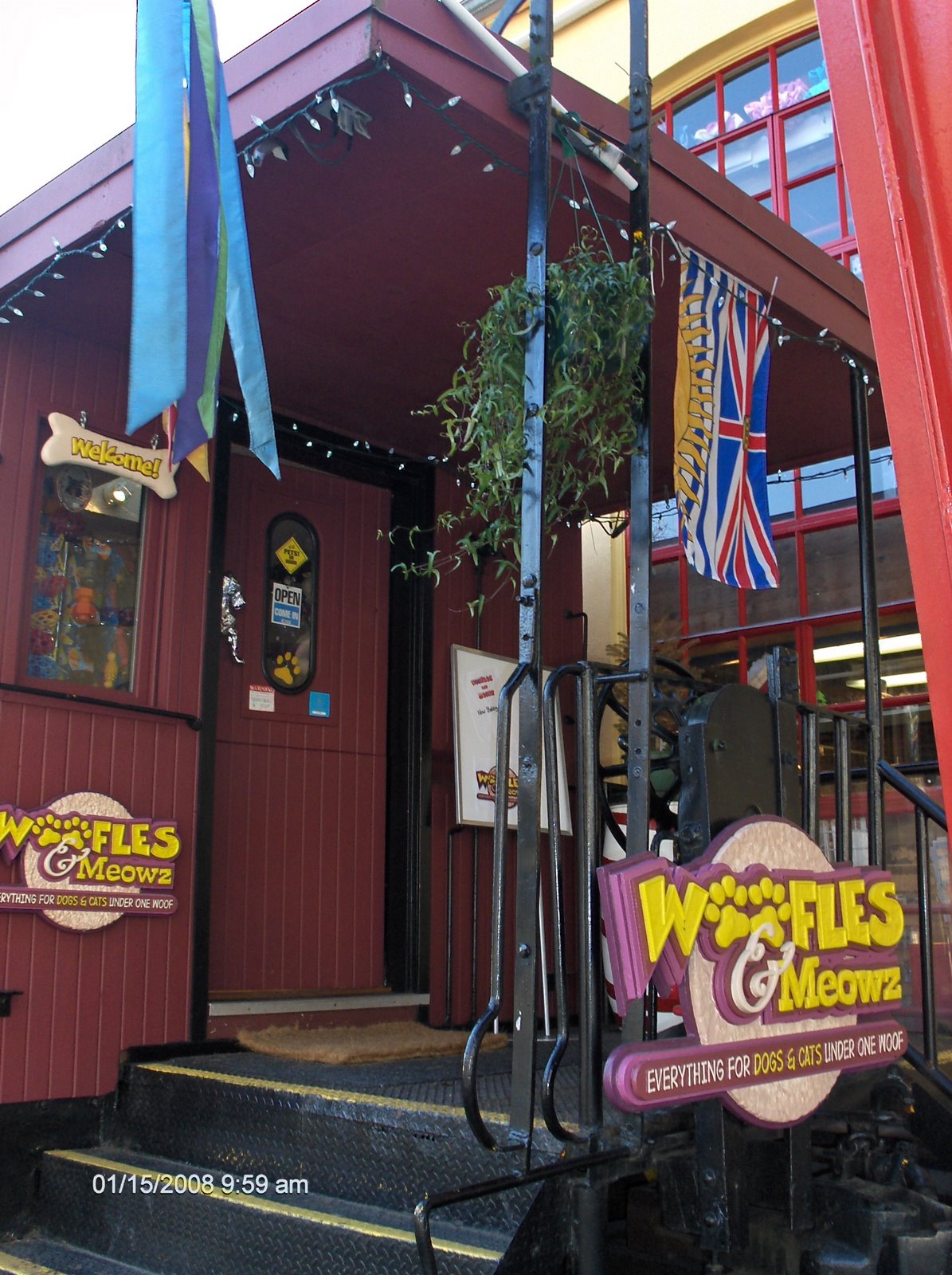
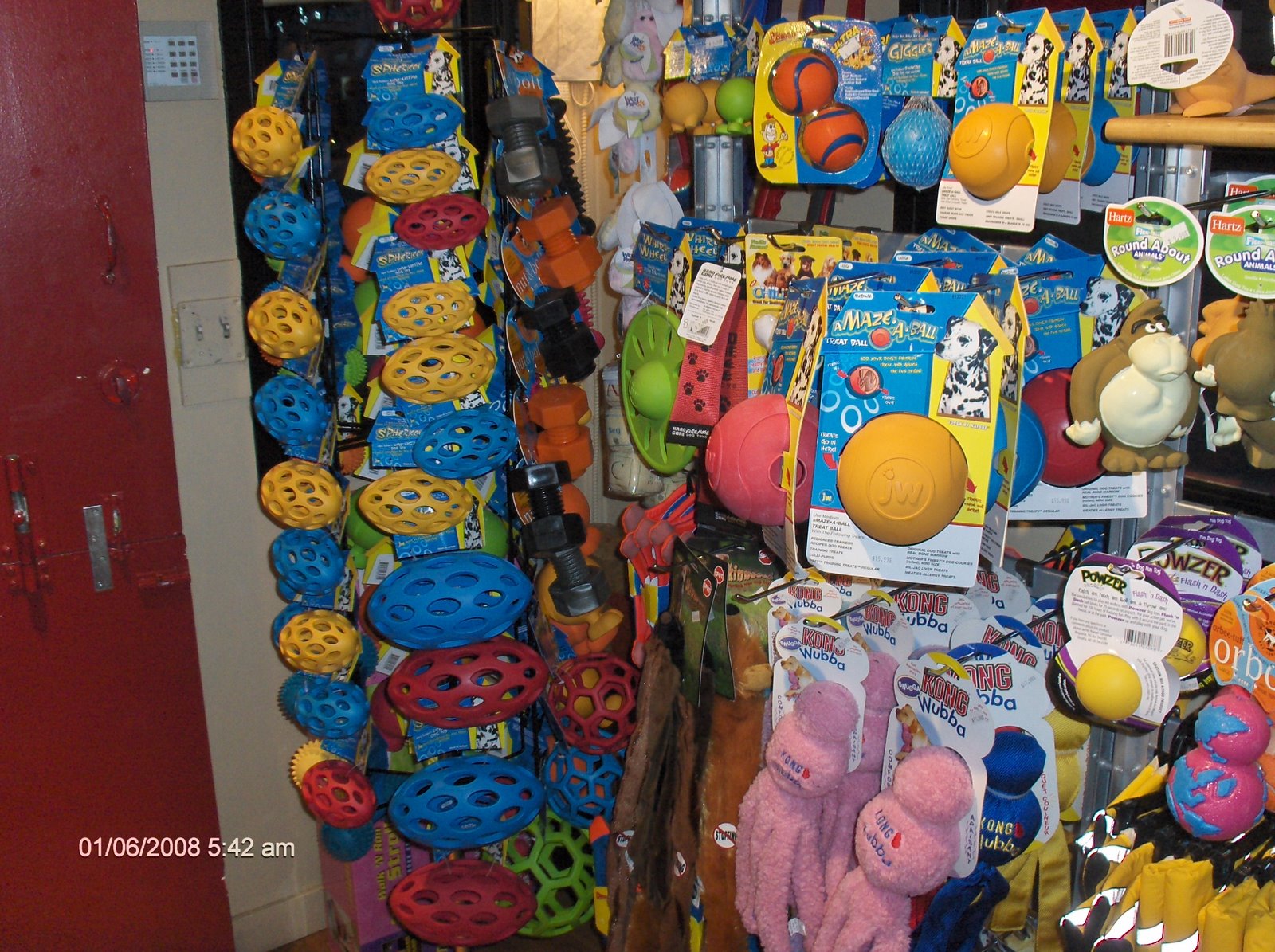
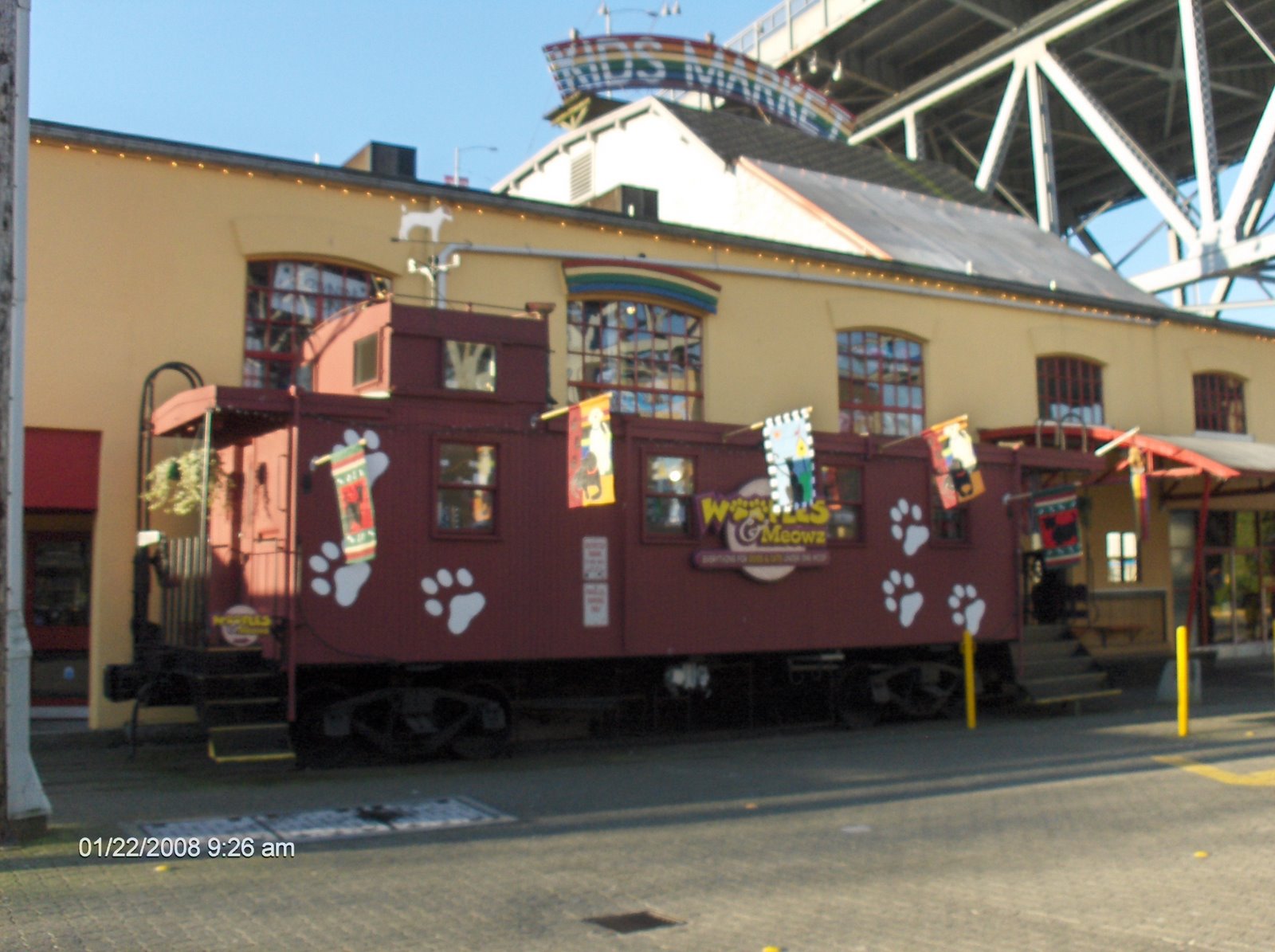
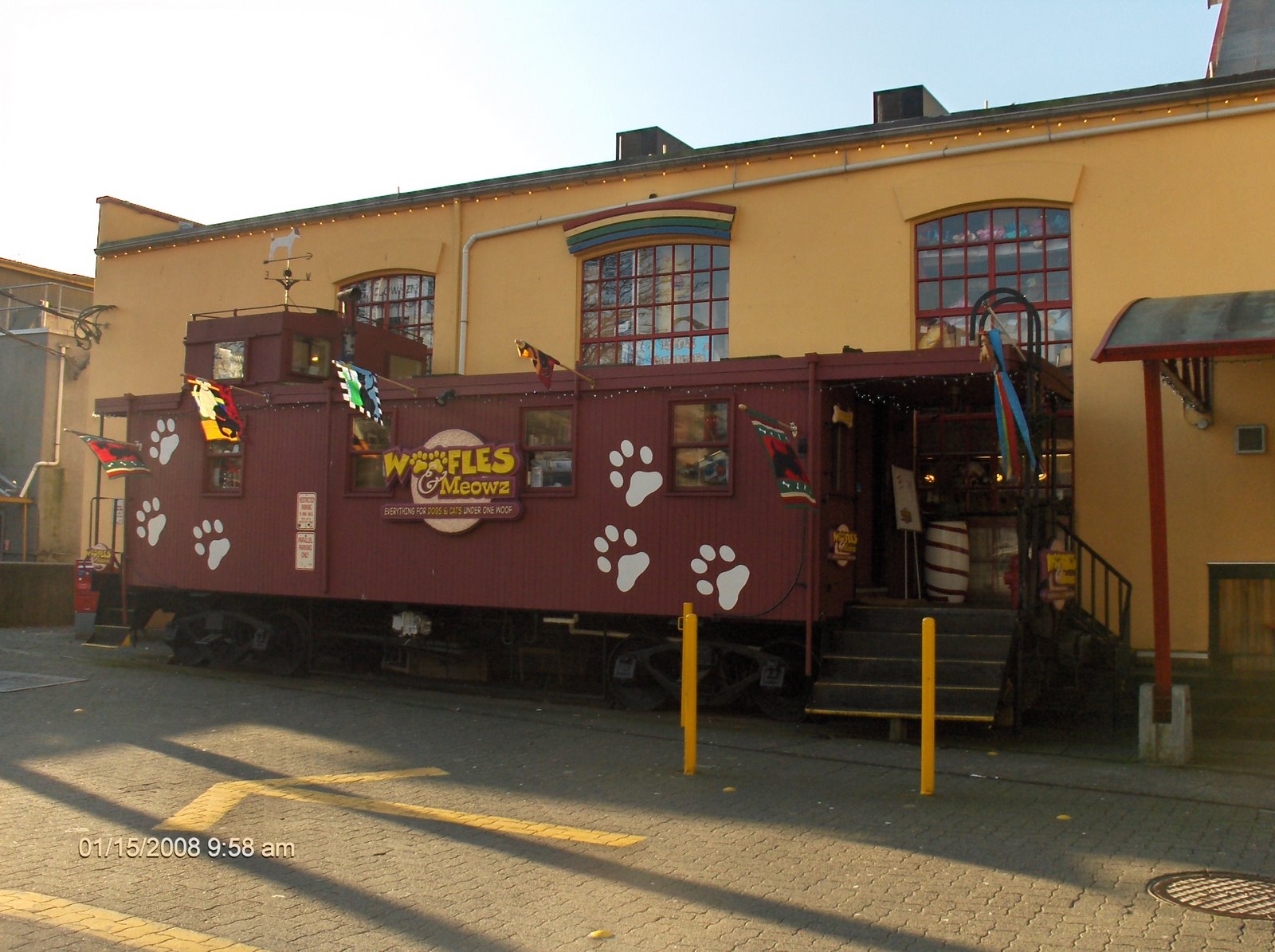
At Woofles and Meowz we don't have alot of room to carry stuff that does not move. As one of Vancouver's first pet Boutiques and the first bakery for dogs in town we utilyze a wonderful old CP Rail caboose. This makes for space being a premium to say the least and it gives me a huge incentive to only have the best of the best and the most popular items I can find to maximize the merchandising options. If something does not move in this store, it is out!
One of the most often asked questions is "what is the most popular toys that you sell?"
I usually follow up with "what kind of dog do you have and what age is it presently?"
This makes, obviously, a big difference in what is "popular".
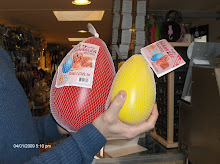
For big dog breeds the MOST popular toy we carry is "The Scrambler" an egg shaped toy mentioned in an earlier blog.
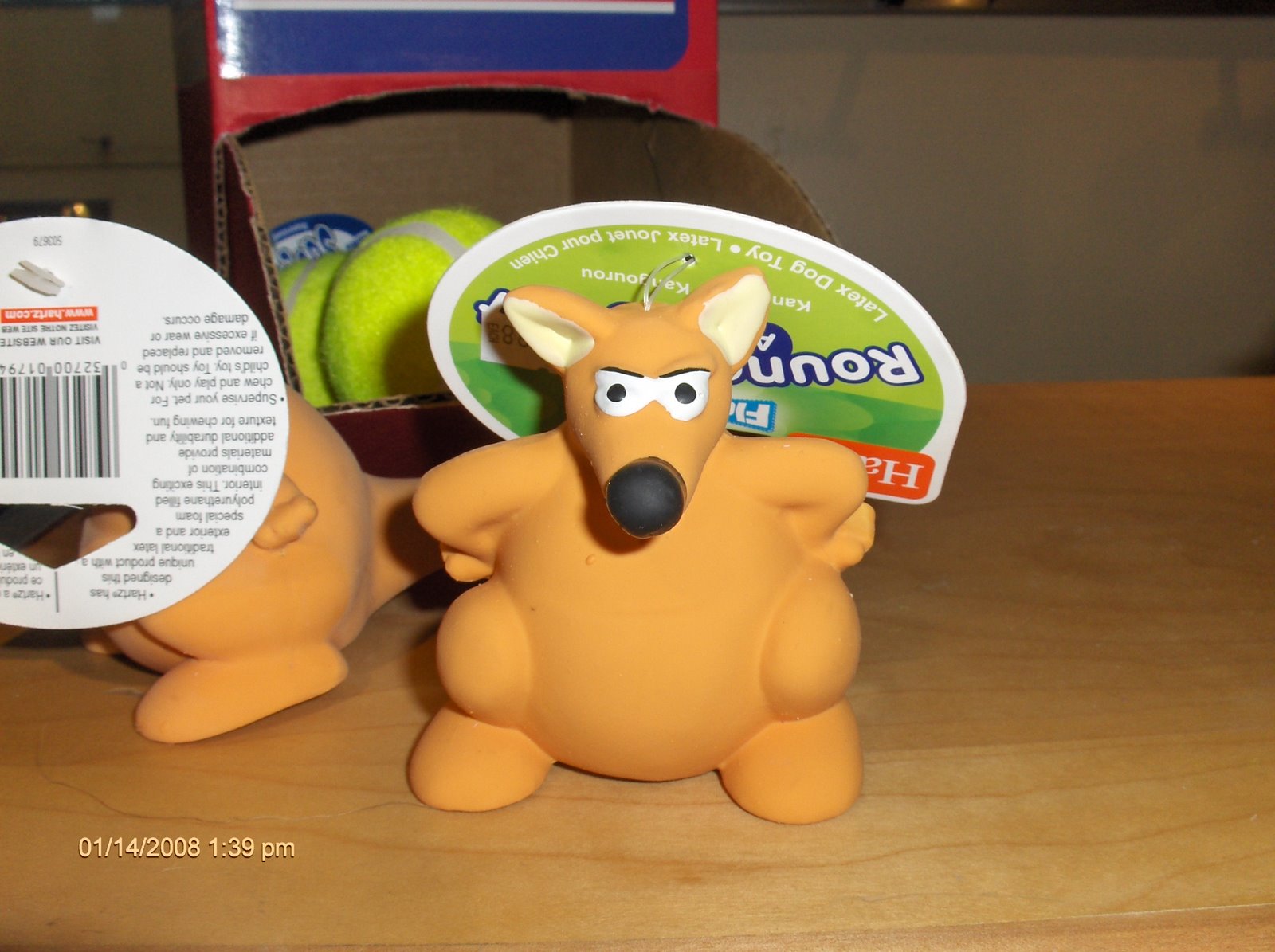
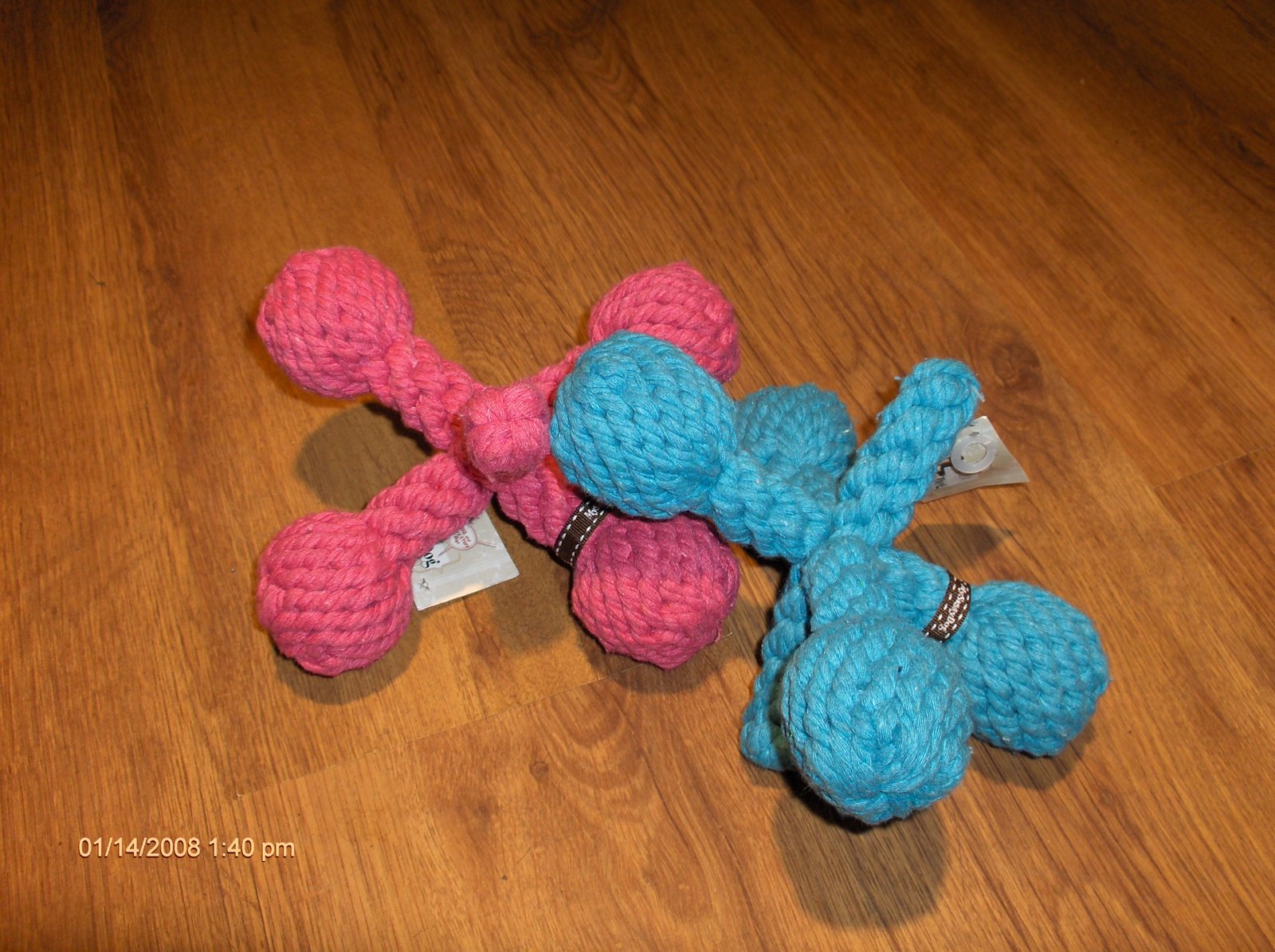
For medium sized dogs that are quite active and love to retrieve we have a super cool slingshot from "Hyperdog" in two sizes that will throw a ball 150-220 feet depending on the size....GREAT for those hyper dogs who love to chase.
For the active player/chewer we carry the firehose toys and one of my favourites called "Egg babies"..a cute and yet slightly macabre toy that has a plush toy with an opening that the dog can dig out squeeking eggs.....cute and saves the toy from being shredded..at least that is the theory. Remember. <<>>
and we proudly display that sign in the store
One of the most often asked questions is "what is the most popular toys that you sell?"
I usually follow up with "what kind of dog do you have and what age is it presently?"
This makes, obviously, a big difference in what is "popular".
For big dog breeds the MOST popular toy we carry is "The Scrambler" an egg shaped toy mentioned in an earlier blog.
For medium sized dogs that are quite active and love to retrieve we have a super cool slingshot from "Hyperdog" in two sizes that will throw a ball 150-220 feet depending on the size....GREAT for those hyper dogs who love to chase.
For the active player/chewer we carry the firehose toys and one of my favourites called "Egg babies"..a cute and yet slightly macabre toy that has a plush toy with an opening that the dog can dig out squeeking eggs.....cute and saves the toy from being shredded..at least that is the theory. Remember. <<
and we proudly display that sign in the store
Subscribe to:
Posts (Atom)