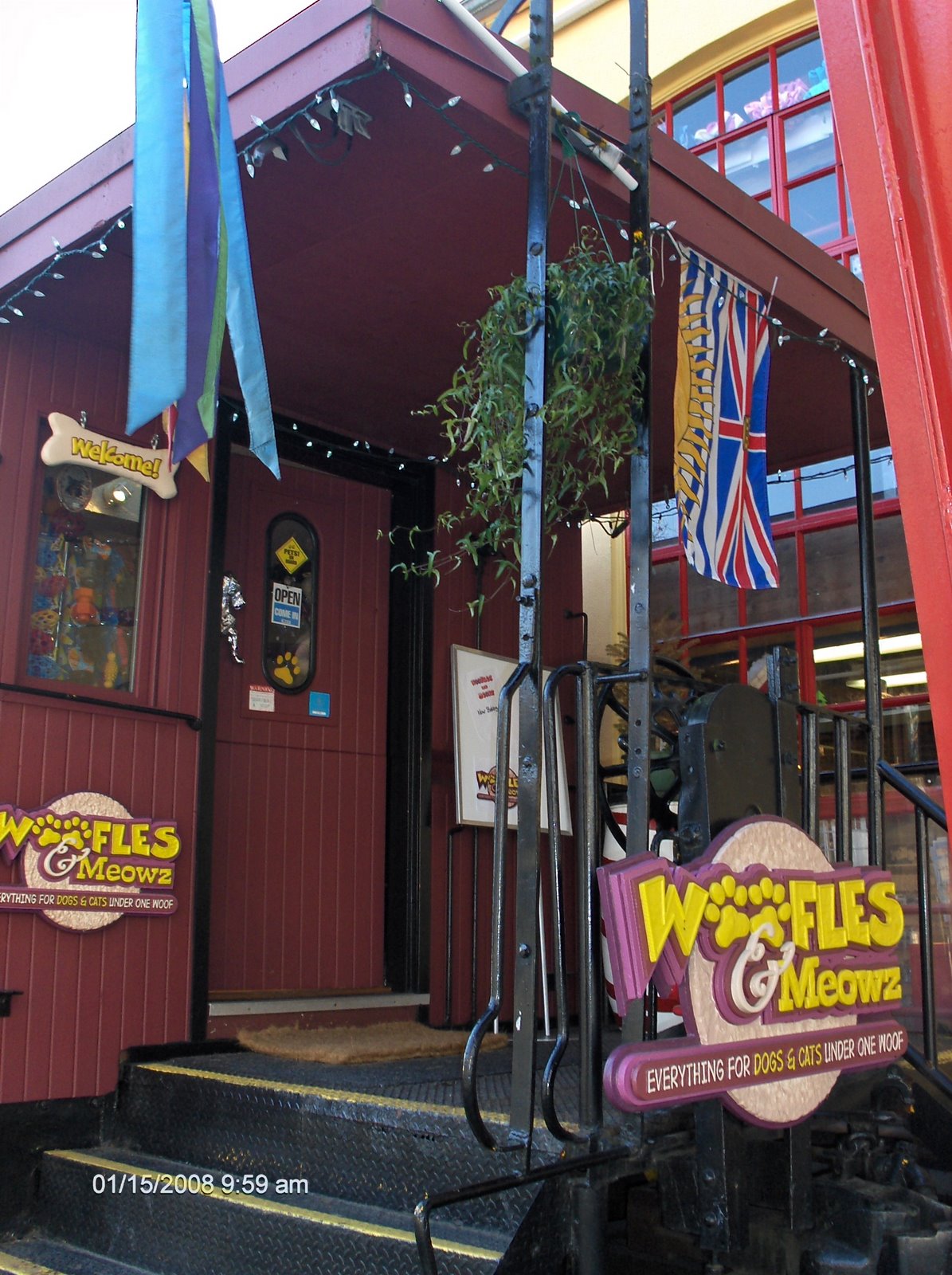
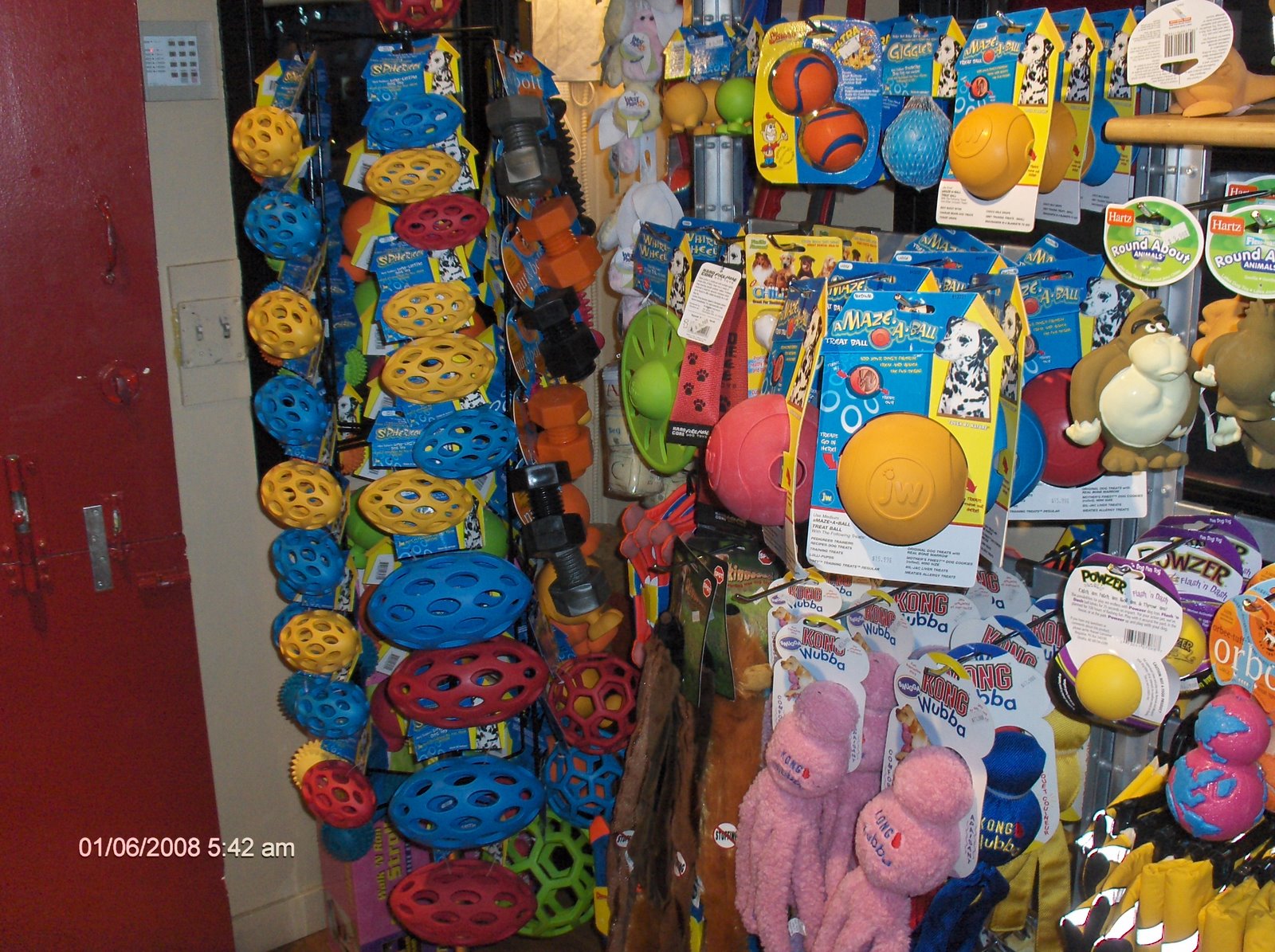
Many people who come into Woofles and Meowz ask for advice when it comes to nutrition for their pets and we try to give as best as we can however I know enough that I don't know everything.
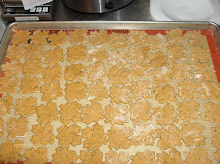
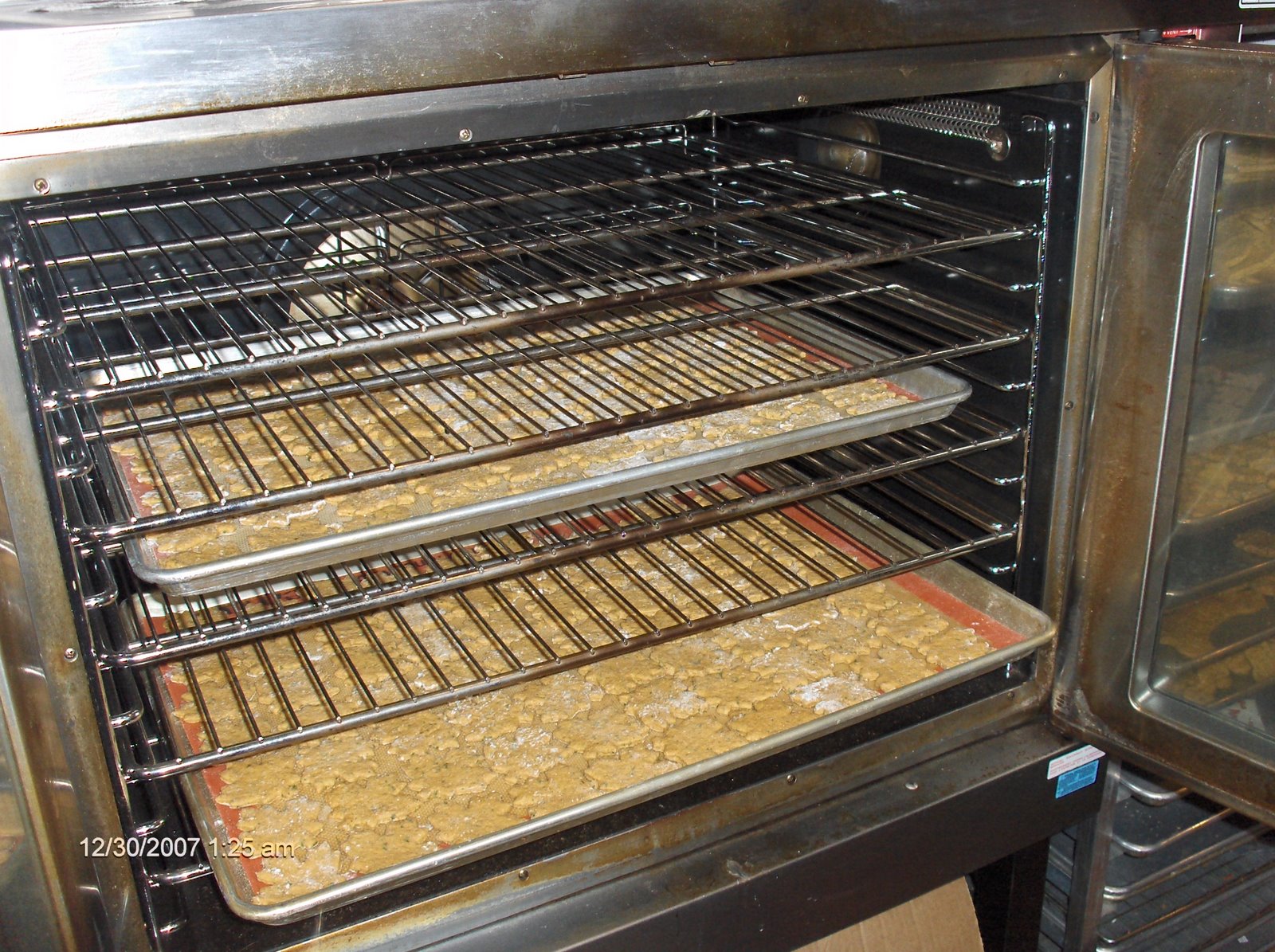
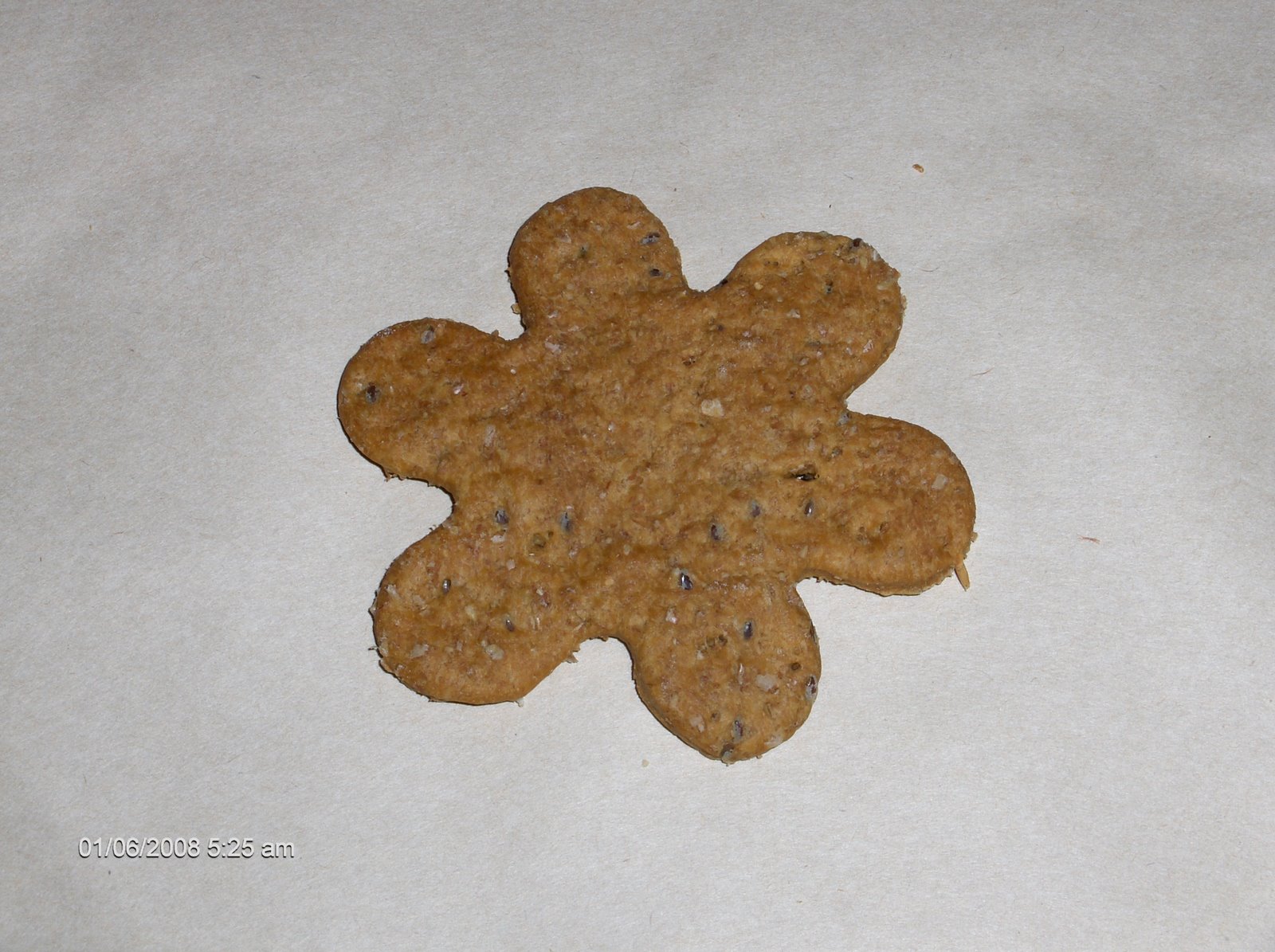
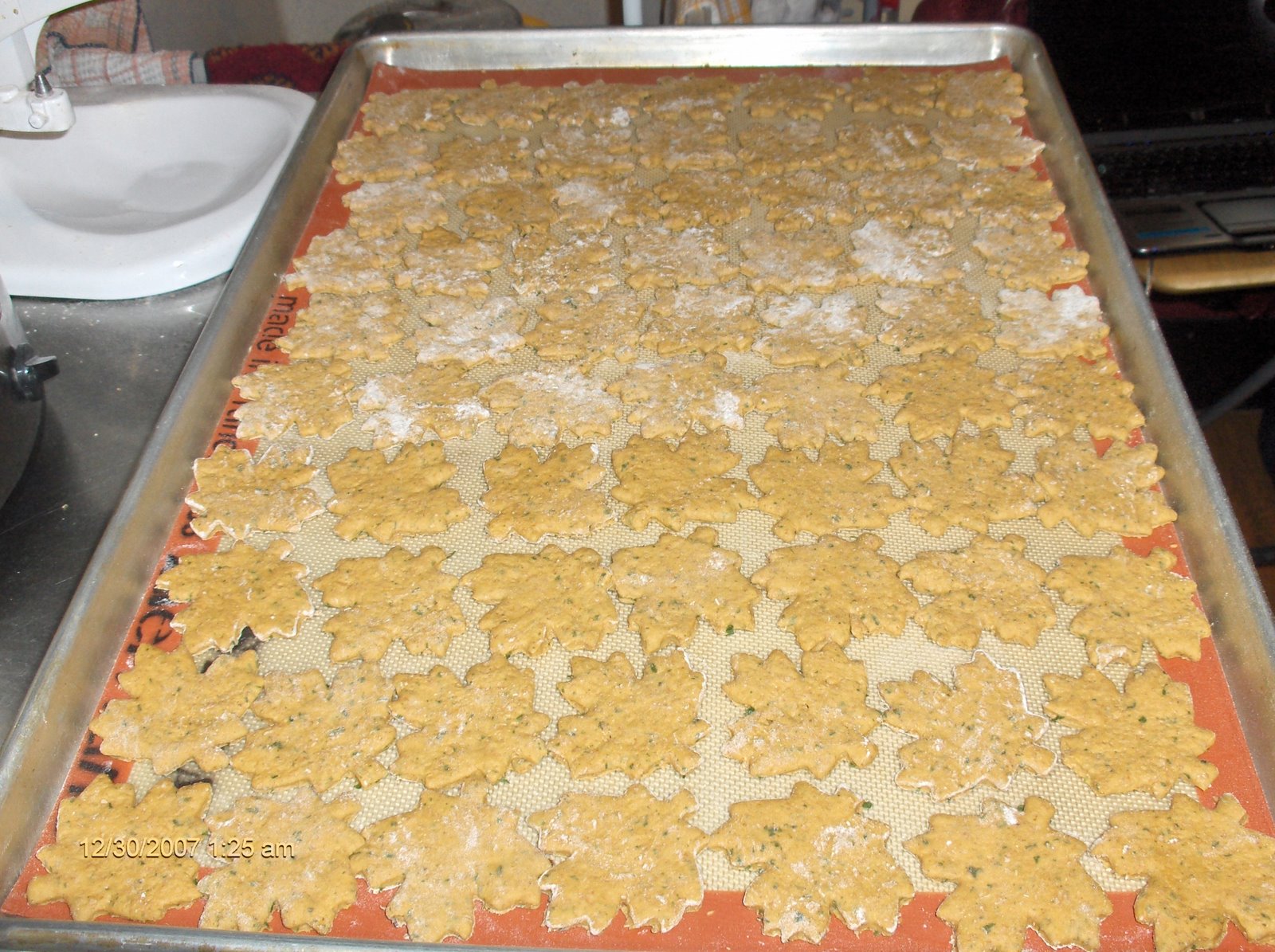
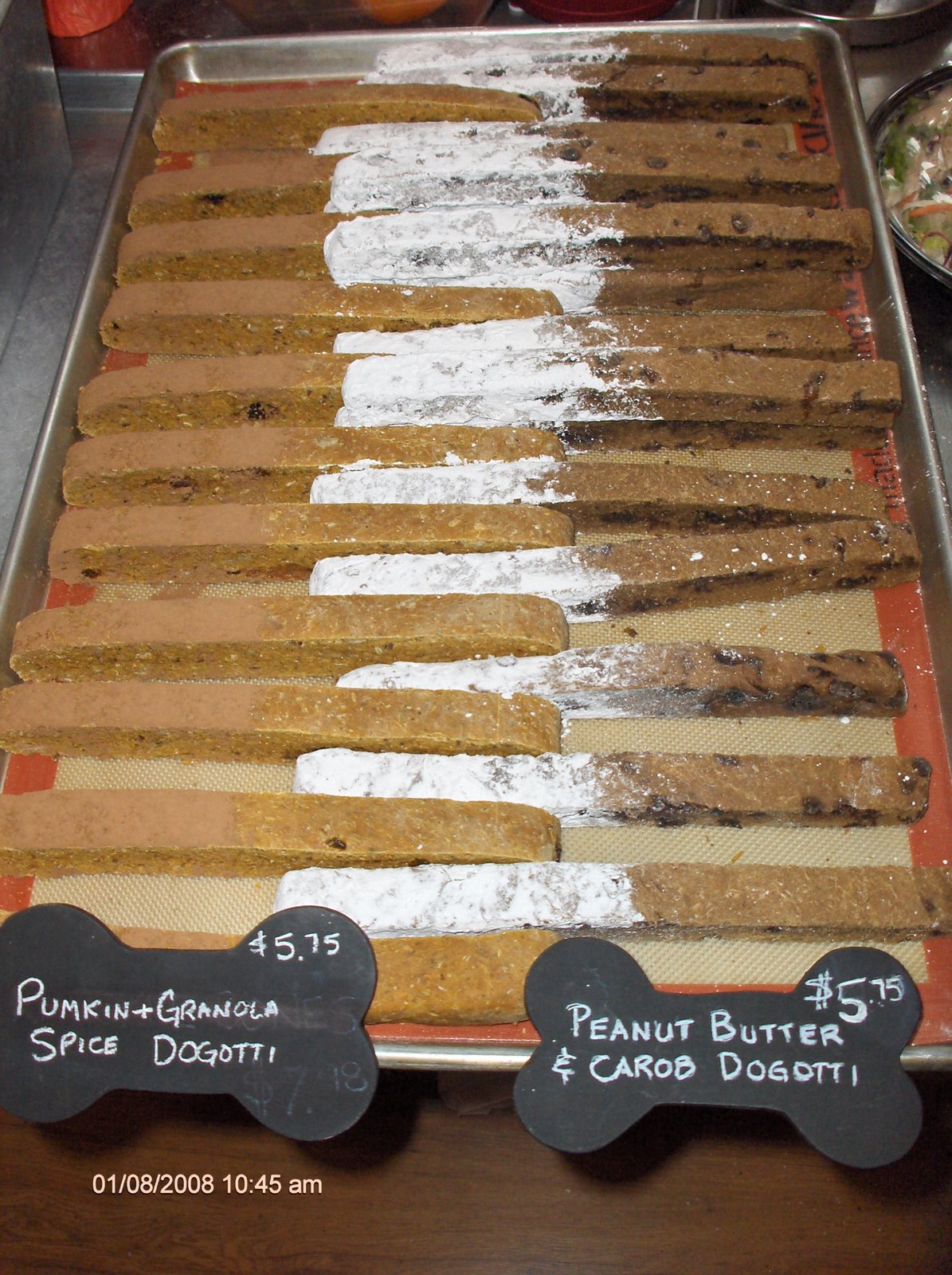
What we DO know though is what hundreds upon hundreds of pet owners tell us when buying our organic treats that we make here in the store. We modify our recipes with regard to what people are needing and wanting for their dog and cat and have created a good line of treats that our four footed friends can eat with satisfaction and benefit.
There are some very interesting facts that have arisen in the very short past that I think are all linked to good pet health:
Dogs in urban area are much less healthy than their country counterparts.
Cats who eat the odd mouse and bird have far fewer digestion problems than those who have their food placed out in a food bowl everyday.
"Working dogs" who never have the opportunity to DO any kind of work or exercise will almost without fail experience a sort of auto-immune histamine reaction to particular foods usually starting with wheat proteins then chicken then....well its never ending.
Often these problems are treated by well meaning but clueless Vets with antibiotics which in most cases freaks out the dog's digestive system.
An animal that is given a varied diet with a balance of bacteria in all the right ways will be able to process food much better that those pets who have very nucleated diets.
Meat, vegetables, whole grains and low sugar and salt is the way to go with any dogs diet...sounds familiar does it not?!?!?
Sometimes people ask me about vitamins...like they are the be all sure cure for what is a poor diet.
When trace minerals are deficient in our food and water, the body's defense systems cannot function properly. Likewise, animals lacking proper amounts of copper, iron, selenium, and others, have been found to be much more likely to develop diseases and have shorter lifespans. Most animals are usually prescribed drugs, specifically antibiotics and vitamins, at times when they are ill. However, antibiotics kill all germs and rarely discriminate between good and bad germs. When the 'good' germs are constantly assaulted by antibiotics, the 'bad' germs can become super-germs which may then become impervious to drugs. Keeping the immune system healthy in the first place can vastly reduce the need for constant antibiotic treatment. Indeed, antibiotics are only indicated when the body cannot naturally fight against bacteria, not simply when you have a cold but are healthy enough to fight it off. Vitamins help to fortify the immune system and also control the body's appropriation of minerals. However, if there are no vitamins and no trace minerals, the body has no ability to use the vitamins to help fight disease and therefore the vitamins are useless. It is for that reason that replacing lost minerals in both your diet and your pet's diet is essential.Our pets need vitamins and minerals. Just like for us, vitamins and minerals are very important nutrients. In today’s environment, they may need them more than we had originally thought as current diets rob us of much beneficial nutrients. Vitamins perform many important functions for our pets. If your pets depend on canned or dried food, it may be necessary to consider supplementing their diet with vitamins and minerals.
...not to mention a big dose of vegetables. Our pets too live in a polluted world full of toxic chemicals. Besides, they live closer to the ground, closer to pollutants that emanate from synthetic carpets, or to cleaning solvents used on the floor, or to the herbicides and pesticides sprayed in the yard. Indeed, lawn fertilizers have been shown to increase the chance of disease in dogs that play on sprayed lawns.Pets eat highly processed food, possibly the most highly processed on the planet. Often the ingredients are of questionable origin. Though since the debacle of the Chinese food suppliers most food manufacturers have really stepped up their game especially in the Cat and Dog food arena. ........though....would you eat dog or cat food? Many pet foods are loaded with chemicals. Such as artificial colors that make the food look pretty to your eyes. Some of them are banned in other countries. It seems plausible that some pets are sensitive to such chemicals. The food may look good to you but it may be causing grief for your animal. Did you know that advertising claims of "complete and balanced" pet diets are based on uncertain minimum nutritional requirements designed for maintenance of barely adequate health, not optimum health? Also it is hardly comforting to know that many vitamins and minerals are lost in the processing or are simply missing to begin with.Vitamins are classified into 2 main groups: Fat soluble and water soluble. Vitamins A, D, E and K are fat soluble dissolved in fats. A is the skin vitamin. D is for healthy bones and teeth. E is the antioxidant vitamin and K is the blood clotting vitamin. Liver is an excellent food source for all these vitamins. Unfortunately you need to ensure adequate vitamin intake to stay healthy long term. The B vitamin group and vitamin C are water soluble. This means that they are easily lost through cooking and processing. However overdosing is not as big a concern as it is with the fat soluble vitamins. The problem is they flush out of your system regularly, so adequate intake is imperative.The B family of vitamins is for healthy muscle, skin and blood. Vitamin C, the stress, antioxidant vitamin is a popular vitamin for us humans. Carnivores can make their own vitamin C but lately it is believed that they may not be making enough especially in stressful situations. Again liver and kidney are good food sources for pets. This does not mean liver flavor though!How would we suspect a vitamin deficiency in your pet? Your dog or cat will show us the signs. For example: poor skin and hair coat when deficient in vitamins A and / or B; Your pet will be anemic and constantly tired if deficient in vitamin B; and will have cancer and heart problems if deficient in vitamin D. Hopefully, you buy your animal a premium quality food: food that has no preservatives and artificial colors. You also may share some nutritious extras with your pet, things like carrots, broccoli, whole grain rice, oatmeal, and yogurt. If you want to improve your pet's health you need to provide better than adequate nutrition. That means more than what is available in those bags of pet food. You need to fortify your animal's diet with extra vitamins and minerals......and veggies!
That will help strengthen your pet internally so it can fight off the effects of contaminants and stress. Supplementation may also help your pet compensate for possible genetic defects that are becoming increasingly common, particularly among pure breed dogs and cats. Animal breeders supplement their animals with vitamin and mineral supplements. They will tell you that pet food is not enough to protect animals or enable them to achieve optimal health. Well-meaning pet owners who supplement their animals' diets may, in fact, be helping them very little, and possibly causing problems. This is because many pet supplements contain low-quality vitamins and potentially allergenic ingredients such as brewer's yeast and artificial flavors and dyes.Minerals are vital to digestion, growth, repair of tissues, to strong bones, teeth, claws, skin and hair coat. Major minerals such as calcium, magnesium, iron and potassium are often present in supplements, but often enough, trace minerals are often lacking. Yet they are equally important to our pets. Most pet supplements also lack vitamin C because dogs and cats, as do most mammals, produce their own vitamin C internally. However, dogs and cats are minimal producers compared to other animals. Vitamin C performs many critical tasks in your pets body. It is a natural pain reliever and detoxifier. It is a major antioxidant and contributor to immune function. And it plays a major role in the building of collagen, the connective tissue that literally holds the body together. It is, therefore, vital to your pet. Ensure adequate intake of vitamin c for your animal. You should consult your veterinarian on the most appropriate vitamin supplement for your pet and the recommended doses of the vitamins and minerals it needs, as each pet is a bit different. Now...be careful when it comes to going to your Vet for nutritional advice as most Vet's I know are seriously lacking in that regard. Not to say all Vets know very little about nutrition but many don't so try to do some research yourself. there is alot of info out there online and through other websites and blogs, chat rooms and pet forums. Always check out what has worked for other pet owners first and good luck!
WOOF!
Wednesday, November 5, 2008


Saturday, November 1, 2008
Christmas dog accessories. Doggy Santa.
Ok so Halloween is over..Madonna has left the building and the prospect of the Holiday season looms like a cloudbank over yonder ridge! (I heard that somewhere and always wanted to use the term "yonder")
Christmas is coming to Woofles and Meowz and THIS year we have even more doggy santa hats, kitty reindeer antlers and pet stockings aaaalllllll in readiness for the season of "ho-ho-ho".
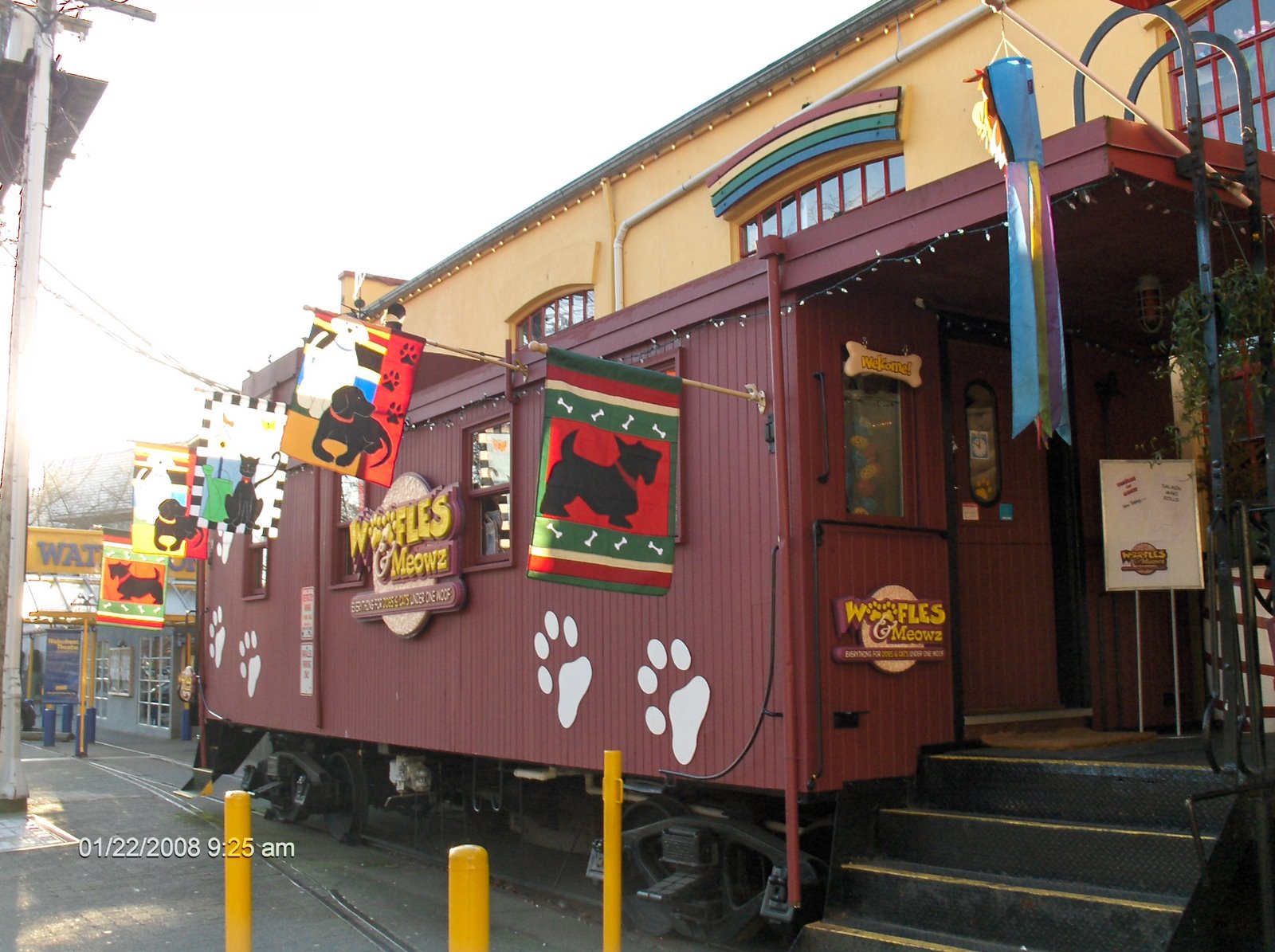
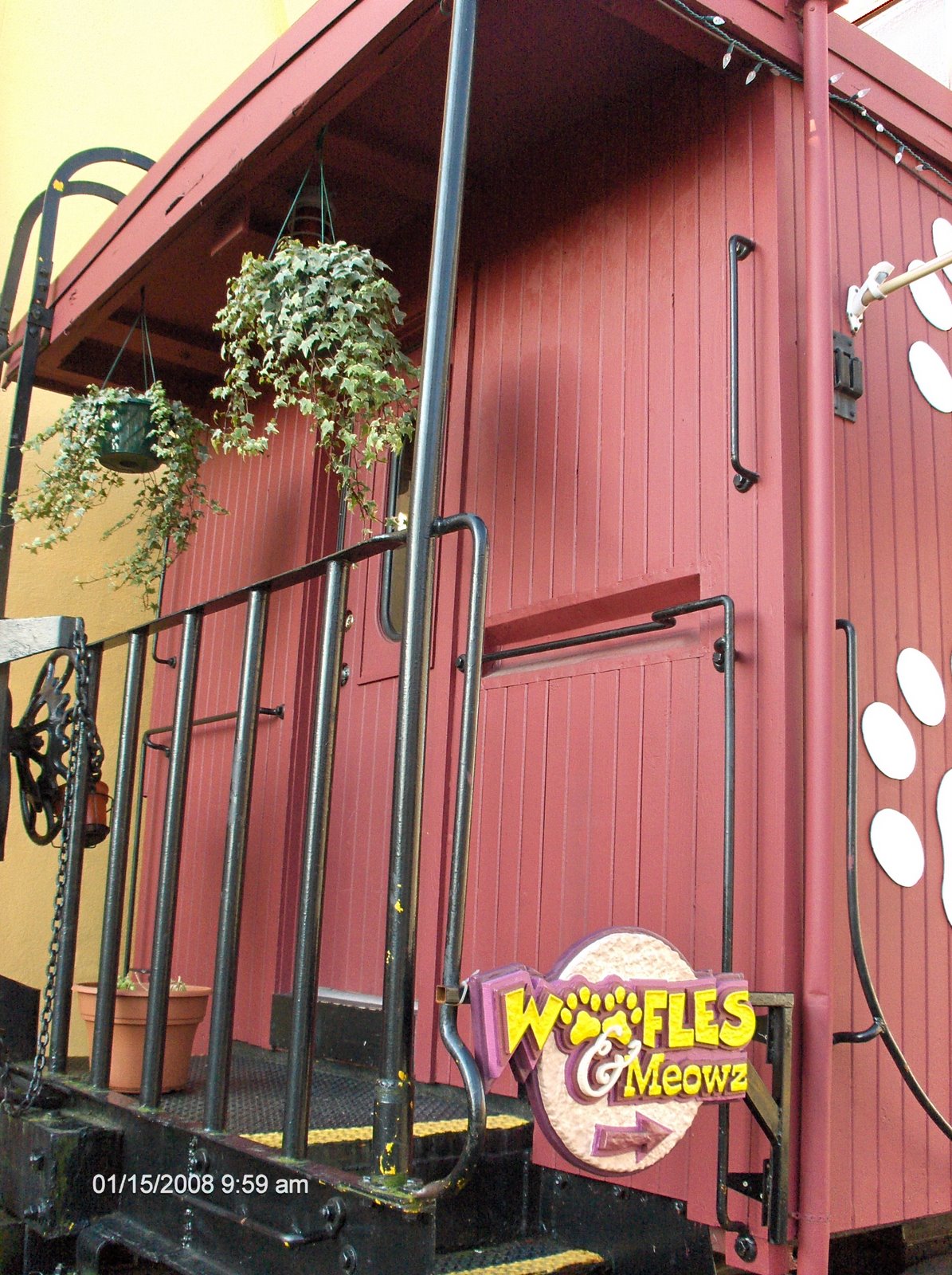
Here in the caboose on Granville island we dont have a huge anount of room but we tend to have waaaayyy more than most other pet boutique stores and more than most simple pet stores. Our buyers are very good when it comes to the cool stuff!
Pet stockings for santa to fill up are gonna be popular as well as the usual santa hats and reindeer antlers (lighted or non)...anything for the pooch or kitty to look silly for the camera.
My dogs used to wear the Santa hats all day. I think because they were warmer and who does not get a wee thrill or smile when we see the white trimmed red hat on anyone!
THIS year though...and you can thank me anytime, I am NOT putting up the Christmas decorations or merchandise until waaaaay into November. This habit of retailors putting up the Christmas bling either slightly before or right after halloween is silly. I mean, I GET it...the news is all about how some retailers are betting on using their "new again" lay-a-way plans or plan on putting everything on sale right away..............ummmmmm here is the advice of one store owner to those who do that.
"Buy good stuff to begin with and mark it up only fairly..then you wont be stuck with it come January 1st"...right?!?!??!?
As I only have less than 400 sq feet in the caboose I have to have only that stuff that is demanded, requested and tried and true.
Santa hats and stockings will be gone by December 20th......yay. Come on by and say you saw this blog and get 20% off any Item up to Christmas of 2008.
HO-HO-HO!!!!
Cat Safety in Vancouver
As I usually get dogs and their owners shopping in Woofles and Meowz for varous dog treats, dog toys or equipment but there is a good number of people here for what the "Meowz" part can provide.
Cat toys, catnip, treats etc are all here but I sometimes get accused of pandering to the Woofles especially in the advice or help arena so the following is a good 40 tips on cat safety that is a followup to the pet safety tips on a previous blog...all the best!
MEOW!!!
1. You know your cat. If she's acting strange, err on the side of caution: Take her to the vet.
2. Antifreeze is sweet but deadly. If your car leaks, get it fixed, and keep antifreeze far out of reach from your pets. Even one teaspoonful is fatal.
3. Do not underestimate your cat; it can fall out of a window, says Pat Coughlin, a cat owner in Norway. Install protective screens or storm windows to let your cat safely enjoy the view.
4. If your cat tends to chew electrical cords, keep her in a cord-free room when unsupervised, says Larry Lachman, an animal behaviorist in Carmel, Calif. Also, spray cords with safe spicy or bitter-tasting products.
5. If you use clumping litter, groom your cat frequently to remove particles that may accumulate and interfere with elimination.
6. Keep your cats indoors. They'll be healthier and happier, says Ceridwen Attwood, a cat owner in Washington. Outside they're exposed to other animals, risk getting run over by cars and are exposed to the elements.
7. Do not let in strays just for the heck of it, Lachman says. Having strange cats around can overstress your own cat, which may lead to fighting, biting and soiling or spraying around the home.
8. Never hit your cat. Use spray bottles with water if discipline is necessary. Physical punishment doesn't teach your cat appropriate behavior.
9. Consider using clay litter for kittens. If your cat accidentally ingests some litter particles, clay is nontoxic in small quantities.
10. Safely confine your cat when workmen or visitors are in your home [to prevent escape], Lachman says. A bathroom, laundry room, bedroom or cat carrier is ideal for this purpose.
11. Only use cat-specific flea preventives in vet-approved dosages to avoid triggering a dangerous reaction in your cat or kitten.
12. If at all possible, get your cat first, then add a dog to the household, not the other way around, Lachman says. This may reduce fighting over territories.
13. When introducing a kitten to your household, provide food, water, a litterbox, scratching post, bed and toys, and confine your kitten to a safe room (a bathroom or spare bedroom) for the first few days, and any time you cannot directly supervise him. A pheromone diffuser in this safe room can help keep a cat calm.
14. Keep all yarn, string, thread and needles in a secure cabinet. Yarn or string can become caught on a cats barbed tongue and may be swallowed.
15. Don't give cows milk to kittens or adult cats because it may cause gas and diarrhea.
16. Certain human foods and medicines are extremely harmful to cats. Do not leave chocolate, onions or medicines out on counters, Lachman says.
17. Keep your cats identification tag or microchip information current in case your cat wanders away.
18. Train your cat to stay away from the stove at all times, even if not in use, by squirting him with a spray bottle when he gets too close.
19. Do not feed your cat dog food. Cats require different nutrients and more protein in their diets than dogs do.
20. Do not attempt to pick up your cat when he shows signs of defensiveness or aggression. Although your cat adores you, he may still bite or scratch you out of fear.
21. Kittens love to explore, so block their access to the area behind the refrigerator, bookcase or couch so they won't get stuck or injured.
22. Before starting your engine, honk your car horn to scare away any cats sleeping in the engine compartment.
23. Gently handle your kitten on a regular basis to socialize her and prevent behavior problems associated with lack of contact.
24. Do not leave a cat or kitten [unsupervised] with a child under age 7, Lachman says. Kids under age 7 have poor impulse control and can accidentally or intentionally hurt the cat.
25. Cats will make a plaything out of any item, so keep blind cords out of your cats reach to avoid strangulation.
26. With your veterinarians guidance, assemble a kitty first-aid kit and keep this on hand for emergencies.
27. Never leave an iron, hot or cold, sitting on an ironing board. The cord may look like a toy to your kitten and she could pull the iron down on herself.
28. Although cats enjoy playing with the plastic ring from milk jugs, these can be chewed apart and swallowed very easily, says Scott Ransom, a cat owner in Oregon. [My] cat [was] in intensive care for a week once because of this mistake.
29. Cats love moving water, so keep the toilet lid closed to prevent drowning.
30. Don't give cats medicines that aren't intended for cats, says Rosalie Marley, a veteran animal shelter worker in Nebraska. Aspirin, ibuprofen and acetaminophen can be deadly.
31. Keep the clothes dryer and dishwasher shut when not in use. Check inside these appliances before using. Cats love to hide in warm, dark places, but these appliances are fatal when in use.
32. When you pick up your cat, support his chest and legs so he feels safe and does not struggle. This protects you from scratches and bites, too.
33. Some plants are poisonous to cats, Coughlin says. The ASPCA website has a list of toxic and nontoxic plants.
34. Always check your cats whereabouts before closing drawers, closets or doors to avoid accidentally locking your cat in.
35. Your cat can be a danger to smaller pets such as reptiles, fish, birds and rodents. Keep your cat away from other pets when unsupervised.
36. When adding a second cat or kitten to your household, clear his health by your vet prior to bringing him home, so you do not expose your first cat to possible illness.
37. Check your garage door before closing it, to avoid injuring any cats perched there.
38. Install baby locks on cabinets where you keep bug spray, household cleaners or medicines. Your smart cat may learn how to open cupboard doors!
39. Invest in covered wastebaskets and garbage cans for your home to prevent cats from finding dangerous items such as chicken bones or dental floss.
40. Always use a carrier when transporting your cat. Even if your cat loves car rides, she may get underfoot or escape if startled.
Madonna in Vancouver
Well a BIG thanks to Madonna and her crew who flew into town to do a concert at GM place on October 30th.
It was a great show (not her best...the Girlie Show rocked) but as this was a Vancouver gig it was great not to have to travel.
The best part though is that almost EVERYONE in the store has been happy-go-lucky concert attendees.
I have the Madonna tunes rockin' and the conversation is flowing..."oh you paid how much for your tickets??".
Lots of people are in from Edmonton, Calgary, Winnipeg, Victoria etc and I send out a big thanks to those who extended their stay enough to stop by Woofles and Meowz here on Granville Island.
Everyone seems to be in a good mood and getting cool stuff that they may not be able to at home.
For those who stopped by a big thankyou goes out to all you groovin people and I invite you to stop by www.yelp.com and do up a review of any place you may have stopped by while you are here.
Thanks Madonna!
Friday, October 31, 2008
Pet safety in Vancouver.
Here in Vancouver we experience the setting sun as any Canadian would do....earlier with each passing day but we have a much more temperate climate that allows for much of the foliage to hang around.
This makes for some dark streets especially in our wonderfully treed neighborhoods. Some places in the west end are spectacularily shrouded by large maples and a blackening sky as early as before breakfast and at dinner time.....the most frequent times to walk the dog.
Safety for both the pet owner and usually dog (as most cat owners do not walk their cats) is really important this time of year.
It always surprises me when those people with strollers will push them out onto a roadway in a crosswalk as a "test of the waters" to see if people will stop or not. Similar to that, I always find dog owners who have those "extendo" leashes (which are not bad per se and have their benefits)
allow their pets to roam across other peoples paths on sidewalks...onto the roadway and have almost no control of their dogs until they snap them back when they finally realize fido is running toward the wheels of a truck. "yoink!!!!" painful and not fair to the dog.
The most important things to remember when it comes to safety are as follows:
1. Always have your pet in control. A "hard" leash which is just a regular leash attached well to a collar that will not slip off is your main tool to walking a dog.
2.Be VISIBLE...no can see your dog or you if you are dressed in your fashionable all black work clothes. Most cars have blind spots and people themselves are hard to see not to mention a dark coated dog. Light coloured clothing, reflective collars, blinker lights (my favourite) all make for a visible pet and can be fun and fashionable too!
3.Auto drivers cannot and will not stop if they do not see your pet. Do not assume there is anything visible about your dog. Most drivers cannot see anything close to their vehicle that is less than two feet high which is most four footed friends. This is where extendo leads are dangerous...if a car sees you he may not see
4. Nobody...NOBODY has "the right of way"...there is no such thing and one can debate the semantics of it but everything we do in regards to traffic and movement is a priveledge and even though someone might think they have a "right" a 4000lb vehicle has the inertia and physics that outweigh "rights". You can debate this later when your dog is dead and you were in "the right".
5.Clothing safety for your pet...this can work two ways for and against. Protective clothes on wet and cold days can be great and help if they are reflective. They can hinder if they are dark and block the pet's view of oncoming traffic.
6.Watch for excessive salt useage on snowy pathways...this can get on the paws and irritate which causes a chewing on the paws response....simple rinse paws after the walks for half a minute.
............ok so there a few more tips but more to the topic of darkening and wintery days are the previous ones.
Any questions?? please stop by the caboose here on Granville Island at woofles and Meowz.
Happy walking and be safe this autumn and winter.
WOOF!!!
Wednesday, October 29, 2008
Halloween costumes for pets.
So...as probably mentioned, last year I said to myself..."nahhh I'm not gonna bring in any halloween costumes...nobody will want them most likely"........boy was I WRONG!!!
Every hour from October 1st to the All Hallows Eve I had people ask for costumes.
THIS year I looked around and ordered several types with decent construction and materials that would not be too fussy for the dogs to wear...........they are flying off the shelves to say the least. YAY!
Here in Vancouver which was once called "the no fun city" it seems we have turned things around dramatically. There are, again, festivals and fireworks and with the Olympic games in 2010 coming and the "International Out Games" in 2011 so many things that will make this city a fun one once again.
Halloween and parades of pets in costumes are big stuff here from what I have seen and heard as well.
I wonder if it is the trade off of children for pets or simply a nostalgia ride for many who have chosen not to have children and are past the dressing up stage??
I have always said that Halloween is an adult holiday and more truly an Gay adult holiday...after all the gays did create all the good parties and invited the straights to participate..."as long as you didn't show it" or "flaunt your heterosexuality".
Luckily with the excuse to wear your wives pantyhose...most people didn't....and we were all glad. It was a time to party and relax and not worry about labels or looking silly.
But I digress.
Halloween costumes for the pooches seem to be the thing this year for those too cool or can't seem to fork over the expense for an adult costume....a fun and interesting doggy costume can be had for a mere $20 or as simple as a witches hat for $4....anything to get the picture before it gets thrown off.
The major benefit of all this, of course, is that any healthy interaction between pet and owner is a good one.
Any and all fun play for a pet will keep them happy and healthy and if that means a spooktacular pet parade in your city or dressing the pet up as you trick-or-treat with the kids can be fun!!
WOOF!!!
Saturday, October 25, 2008
Citizen canine
Recently I joined a great group out of Victoria called Citizen Canine (http://www.citizencanine.org/) which started as a grassroots organization for the well being of pets and their owners. They seem to be a very well supported group and offer lots of assistance. Please check out their site and see what they have to offer.
One of the bits of info they share very clearly are the questions to ask yourself when choosing a dog......
Choosing a dog should never be taken lightly. Never buy a dog on impulse! And always consider adopting one of the many great shelter dogs
The first question you should ask yourself when considering becoming a dog owner is not "What kind of dog should I get?" but "Am I truly ready to bring a dog into my home and family?." Dog ownership can be a rewarding and wonderful experience, or it can be miserable for everyone involved. It is crucial to be absolutely certain that you are prepared to change your lifestyle to accommodate the needs of a dog BEFORE you get your heart set on any particular dog.
Are you ready to get up earlier every morning for the rest of your animal's life so that you can take him for a walk before work?
If you live alone and work long or unpredictable hours, who will make sure your dog gets fed, walked and taken out to the bathroom?
Bringing a canine companion in your life will mean sacrificing some of the spontaneity you may now enjoy. And don't forget - dogs live from ten to fifteen years or even longer. Dog ownership is a long-term commitment!
The most common reason for animal abandonment from even the most well intended owners is "I have to move." This is of course exacerbated in BC by lack of legislated access for pets, including dogs.
Are you in a stable living situation?
If you did have to move, are you willing to make a commitment to ensure that the dog will move with you?
All dogs need training and it's important to recognize that in the first year or so of their lives, you will need to make a commitment to train and your dog to be comfortable around other people and dogs and to know how to behave in public.
Are you willing to put in the time and effort to socialize your dog and give it basic obedience training?
Before You Start Looking:
The most important investment of time you can make for your dog should be made before you've even met the dog! You need to seriously consider what kind of dog you, your home and your lifestyle are suited for. Too often, people fall in love with a puppy or feel desperate to help a dog they've seen at a shelter - only to bring home a dog that's totally unsuitable for them. This can be devastating to everyone involved, including the dog!
Having clear parameters in mind about such things as age, expected size, coat type, activity requirements, temperament, and potential or known health or training problems will help you make a good decision about the dog that's right for you.
Here are a few tips to help you get started:
Age:
Puppies should be at least eight weeks old before leaving their mother. At five or six weeks old, puppies are barely weaned! They should also have had at least one set of vaccinations before you bring them to their new home.
Getting a dog doesn't always mean getting a puppy. While there are benefits to being the first owner of a dog - there are many benefits to adopting a dog that's not a puppy. Not everyone has time to raise a puppy; an adult dog may be the solution.
Older dogs need new homes for many different reasons, most of which probably have nothing to do with the dog itself.
It is not uncommon for even expensive, purebred dogs to be surrendered to shelters when their owners move or are no longer able or willing to take care of them.
Older dogs have known personality traits that make them an excellent choice for households with small children.
They may have already reached their maximum size, will likely be house and possibly, obedience trained, have probably graduated beyond the chewing-everything-left-in-reach stage and may already have been spayed or neutered.
The energy level of the adult dog is also likely to be more compatible with a household where everyone is in school or at work during the day.
By adopting an older dog, you will not only save a dog from being euthanised but will also make a statement about compassion and the value of all life at all ages, at the same time as bringing a wonderful addition into your family - a win-win situation for everyone!
If you think you might be interested in adopting an older dog, get in touch with the vets, groomers, boarding kennels and training centers in your area. Contact rescue organizations, visit animal shelters, and look in the newspaper. You may be able to negotiate a "trial period", particularly if the dog comes from a rescue organization to insure everyone is happy and getting along before a firm commitment is made.
If you do have your heart set on getting a puppy, here are a few tips on how to pick one from a litter.1. Confident?
Try and call the puppy to you by kneeling down, clapping gently and calling to him.A confident puppy will come readily, tail up and attempt to play with your hands.
2. Independent?
Stand up and walk away from the pup in a normal manner. Make sure the pup sees you walk away.Not following indicates independence, which may make training difficult later on.
3. Dominant or Submissive?
Crouch down and gently roll the pup on his back and hold it with one hand for a full 30 seconds. Fierce resistance, such as flailing and crying out indicates difficulty with submission Let pup stand up and gently stroke him from the head to back while you crouch beside him. Continue stroking until a recognizable behavior is established.The pup may try to dominate by jumping, nipping or growling, or may accept your dominance by cuddling up and trying to lick you.
Bend over and cradle the pup under its belly, fingers interlaced, palms up and elevate just off the ground. Hold it there for 30 seconds.Again, fierce struggling and growling are indications that the dog has a tendency to be dominant, and little or no struggle indicates submission.
Dominant dogs may have aggressive tendencies, both with people and other dogs. They do not make good pets for children or the elderly. There could be difficulties teaching the dog "its place" in the social order of your household. These dogs should only be considered by someone who has experience with dominant dogs.
Pups that submit readily and avoid eye contact may be overly submissive and aren't a good choice for a first-time dog owner. They will need special handling to build confidence and bring them out of their shells. These pups do not adapt well to change. They do best in very structured environment. They are usually safe around children but may bite if severely stressed.
Ideally, pups should struggle a bit, and then settle with some eye contact.
4. Retriever?
Crouch beside pup and attract its attention with crumpled up paper ball. When the pup shows interest and is watching, toss the object 1 to 2 meters in front of pup.There is a high correlation between ability to retrieve and willingness to work with a human.
5. Sensitive?
Take puppy's webbing of one front foot and press between finger and thumb lightly, then more firmly till you get a response, while you count slowly to 10. Stop as soon as puppy pulls away or shows discomfort.If the puppy starts squirming in less than a 3-4 seconds, it is very sensitive to touch. If you're looking for a "snuggle-bunny", this may not be the right dog for you.
Make a sharp noise a few feet from the puppy.Cringing and/or attempting to hide may indicate the puppy is shy. If the puppy ignores the sound, he may have a hearing problem. Ideally, the pup will try and locate the sound and show some curiosity about it.
Place pup in centre of room. Tie a string around a large towel and jerk it across the floor a few feet away from the puppy.Running away and hiding is not a good sign!
It requires a great deal of extra work to help a "spooky" dog adapt to new situations or sudden changes. Some dogs can become very aggressive if they are frightened, so delicate handling will be required to prevent this from happening.
Expected Size:
Dogs range in size from the tiny Toy Poodle to the very large Great Dane - and everything in between. Consider the size of your home, your yard, and your vehicle. But, don't be fooled into thinking any small dog will be content in a small living space. Some small dogs, Jack Russell Terriers for instance, require a LOT of exercise. Conversely, some very large breed dogs, like Mastiffs, are content to flop on the floor and do nothing all day.Are you interested in a "lap dog" or a dog big enough to protect you or your home?What about your ability to handle the dog, on leash or off?
There is generally a standard range of sizes for any given breed of purebred dog. It can be a little harder to predict the size that a mixed breed dog will reach. If the dog you are considering is a puppy - it may help to view the dog's parents, if you can. If not, you may want to ask a veterinarian to give you an estimate. If you are adopting a dog from a shelter, generally they will attempt to identify which breeds a dog may be and estimate a size for you.
Coat Type:
Almost all dogs have coats that shed to one degree or another. How do you feel about dog hair and dust bunnies? Does anyone in your home have allergies to dog hair or dog dander?
Many breeds of dog require regular coat care and grooming. This could mean investing in a dog brush, and spending time using it or it may mean taking the dog to a professional groomer. This can add up to quite an expense over the lifetime of a dog.
Dogs with oily outer coats can develop an unpleasant "doggy odor".
Dogs with short hair may not be suited to cooler, northern climates - particularly if they will be expected to spend a great deal of time outdoors.
Activity Requirements:
There is a huge variation between breeds and individual dogs as to how much activity they require. Some are very energetic and need almost constant physical activity and mental stimulation. Others are content to be companion animals and need very little exercise to stay healthy.
Are you looking for a dog to take running and hiking, or a couch potato to keep you company?
Typically Basset Hounds, Dachshunds, and Bernese Mountain Dogs don't make great jogging companions. Similarly, Border Collies, Australian Shepherds and Jack Russell Terriers are not ideal for being left alone for long periods of time.
How much and what types of exercise could you provide for your dog?
If your time is limited, you should look for smaller or less active dogs that can obtain enough exercise in your home or from short walks.
Ask yourself if you are willing to make a commitment to the level of activity and attention that this dog will require. Under and/or over- exercising your dog can have serious consequences on their health, happiness and your relationship with them. While most dogs tend to "slow down" as they mature, it may be several years before this happens!
Gender:
There are pros and cons to either gender-- all of which are generalities and may or may not apply to a specific dog. By all means, if you have a preference, get the gender you want. If you are not sure, it really doesn't matter -- look for the dog you hit it off with.
Temperament:
As with size, the general temperament of any particular breed of purebred dog is usually well known to breeders and veterinarians. Some terms used to describe dog temperaments include: aloof, loyal, dominant, aggressive, independent, gentle, intense. However, as with people, dogs can be quite individual!
Purebred or Mixed-breed?
If you are interested in a purebred dog, you do some research on several different breeds before making up your mind about any one in particular. Most libraries will have a good selection of books on this topic, as does the Internet. You should also consider attending a dog show where you can see adult specimens of the breeds you are interested in. Make sure you buy your dog from a reputable breeder and ask to see the parents as well. A reputable breeder will try to match the puppy's temperament to your family situation.
DO NOT buy a dog or puppy from a pet store ... responsible breeders never sell their puppies through a pet store. Even if the store tells you otherwise, it is likely that the puppies are from puppy mills. For a fantastic resource on the topic please see No Puppy Mills Canada.
You won't be sorry you made a little extra effort to make an informed choice, and you'll have a compatible, happy companion for years to come!
.............so these are some great tips on choosing a dog. We at Woofles and Meowz agree about the "not buying dogs from store"...there is too many other options.
Best of luck...WOOF!!
Subscribe to:
Posts (Atom)